
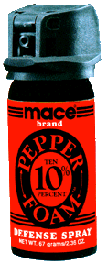
Advanced Chemical Weapons
Everything you ever wanted to know about Chemical Weapons...
...But didn't know who, what, or where to ask
by: James M. Atkinson
Click
Here for a PDF version suitable for printing
(you are on your honor to pay for it).
Click on the following logo to send payment via PayPal.
Introduction
This text is written and presented as a Granite Island Group textbook to be used for the instruction on the use of chemical weapons for personal defense.
This text was written as a supplement for a formal leader led course of classroom instruction and is not intended as a replacement for such training.
The target audience for this text is law enforcement personnel, protective security specialists, and medical personnel involved in treating subjects exposed to chemical weapons.
The author and publisher take no responsibility for the use or misuse of the material herein. This text is intended ONLY for use by qualified and experienced security and law enforcement personnel, and is not intended to replacing existing policies
The author may be contacted via:
Email: jmatk@tscm.com
Web Page: http://www.tscm.com/
Telephone: (978) 381-9111
Advanced Chemical Weapons
Everything you ever wanted to know about chemical weapons...
...But didn't know who, what, or where to ask
“1. A heavy medieval war club with spiked or flanged metal head to crush armor.
2. A ceremonial staff borne or displayed as the symbol of authority of a legislative body.
3. An aromatic spice made from the dried waxy, scarlet or yellowish covering that partly encloses the kernel of the nutmeg.
4. An alternate trademark for Chemical Mace
5. To attack or defend by spraying Chemical Mace
6. Chemical Mace, A trademark for a mixture of organic chemicals used in aerosol form as a weapon to disable with intense burning pain, blepharospasm, acute bronchitis, and respiratory irritation. “
-- American Heritage Dictionary, 1991
Mace is an aerosol weapon used to disable violent attackers.
When properly used, the product can temporarily convert a rational violent attacker into "a blind man, who cannot breath or fight" and will allow a victim the opportunity to escape or defend against attack.
While not absolutely fool-proof, Mace gives a victim the advantage over an attacker by depriving the attacker of the ability to breath and see. It also causes an intense burning pain to the attacker, further disorienting him.
Contrary to what you may have heard, or seen on television, Mace does not instantly drop an attacker in his tracks. It can take several seconds to work, and once it does the results are quite dramatic.
Imagine a blind man, with severe asthma,
who has just dipped his face into a deep fat fryer
Only one company makes Mace, which is a registered trademark.
That company is:
Mace Security International
160 Benmont Avenue
Bennington, VT 05201 USA
(800) 639-4530
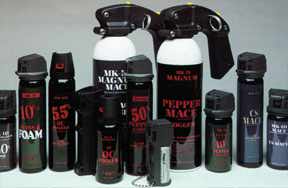
There are over a hundred companies out there manufacturing products similar to Mace, many of the products look like Mace, and many manufactures state that their product "...is as good as, or better than Mace."
Keep in mind that the defense spray industry is a profitable retail business to engage and is full of con-men and rip-off artists. Most of the people selling the sprays have very little actual knowledge of the product or how it works. Their interest is in making a quick buck and nothing more... so Buyer Beware!
Always ask the person selling protective sprays to you, or teaching you to use the product the following questions:
1) What teaching qualifications do they have?
... will they give you a copy of their CV or resume?
... does the instructor have a criminal record? (it’s amazing, many do)
... are his credentials limited to “classified military training” (a hoax)
... did he actually serve in the active military or just the reserves?
... has he been accepted as an expert witness by any court? why not?
... what research has he personally conducted or been involved with?
... what textbooks has he personally written?
... will they give you an actual textbook to work with and take home?
... will they provide you with a course outline to review before class?
2) Are they legitimate, certified tactical trainers?
... or unemployed cops, security guards, or “Rambo wannabe's”?
... or glorified salesmen (little more than used car salesmen)?
... members of the American Society of Law Enforcement Trainers?
... members of the Police Marksman’s Association?
... members of the Association of Security Educators and Trainers?
... why not?
3) Were they trained by the factory?
... if so, for how many weeks (at least two weeks)?
... or was it a quick one day introductory course?
... have they received training and certification while in the military?
... why not?
4) Are they certified to teach the subject matter?
... by Smith and Wesson?
... by Mace Security International?
... by Federal Laboratories?
... by Defense Technology Corporation?
... by Aerko International?
... by Olin-Winchester/Athea Labs?
... by Israeli Military Industries/ISPRA in Nazareth?
... by Hayley and Weller? Pains-Wessex? Alsatex in France?
... why not?
5) Was the training given to them by?
... a salesman?
... a factory trained and legitimate professional tactical trainer?
... before or after the shutdown of the training department?
... by instructors with relevant credentials?
6) Have they been sprayed with the product?
... what was their experience?
... was it a religious experience?
... would they enjoy repeating the experience?
... will you be sprayed with the products during training?
... why?
... why not?
7) When they are finished training you, ask
... will they issue you a letter or a certificate of training?
... will the certificate be signed?
... how long is your certificate good?
... how long is the refresher training?
... is a certificate also issued by: Mace, Federal Labs, Def-Tec, or Aerko?
... will their credentials and the training you receive “back in court”?
... do they only teach law enforcement? if so why?
... What is the law regarding chemical weapons in your state?
... will they give you copies of the laws as part of the class?
... if not, then why?
If they cannot, or will not answer these questions honestly then buy their products and training with great caution (do not risk your time, money, or life on a fraud).
All legitimate trainers and schools issue formal certificates
M.S.D.S - Material Safety Data Sheets
Always insist on a M.S.D.S (Material Safety Data Sheet) for the defensive spray you purchase. This document is an official statement by the manufacture of the potential health risks associated with the product.
All legitimate retailers keep current Material Safety Data Sheet on file for all products they sell.

What Is Mace and Other Chemical Weapons Made Of? (Formulations)
CN (Original Mace)
CR
CS
CN/OC Blend
CS/OC Blend
OC 5.5%
OC 10%
OC Foam
“Tear gases is the common name for substances which, in low concentrations, cause pain in the eyes, flow of tears and difficulty in keeping the eyes open. Tear gases are used mainly in military exercises and in riot control, etc., but have also been used as a method of warfare. Irritating gases have been used in war since ancient times but it was not until after the Second World War that a more systematic search for effective substances was started.
Among a long series of substances, three have become of greater importance than the others. They are effective and imply low risks when used.
These substances are:
chloroacetophenone (codename CN)
orto-chlorobenzylidene-malononitrile (codename CS)
dibenz (b,f)-1,4-oxazepine (codename CR)
CN was formerly the most widely used tear gas. Today, CS has largely replaced CN and is probably the most widely used tear gas internationally.
All tear gases have in common that they cause almost instant pain in the eyes, flow of tears and cramp of the eyelids. The strongly irritating effect leads to a more or less pronounced incapacitation of exposed persons. Apart from the effects on the eyes, most tear gases cause irritation in the nose and mouth, throat and airways and sometimes also in the skin, particularly in moist and warm parts. In situations of massive exposure, tear gas, which if swallowed, may also cause vomiting.
Disagreeable sensations caused by exposure to tear gas are so strong that victims cannot behave rationally, which explains why tear gases cause incapacitation. The irritating effect remains as long as there is sufficient concentration of tear gas present but disappears fairly quickly (15-30 min.) after exposure has ceased.
The irritating properties of tear gases depend on nerves in mucous membrane and skin being affected. Sensitivity to tear gases varies considerably between different individuals. Factors influencing individual reactions may be emotional state, motivation, physical activity, ambient temperature and humidity. “
-- Source: A FOA Briefing Book on Chemical Weapons, 1992
CN -- omega-Chloracetophenone C6H5COCh2C1
Lacrimator Agent
Invented by the German chemist Graebe in 1869
The name MACE is derived from Methyl chloroACEtophenone
This was the original Chemical Mace product
Smith and Wesson made the original Chemical Mace
Widely regarded as the original “tear gas”
Also known as:
alpha-Chloracetophenone
1-Chloracetophenone
2-Chloracetophenone
Phenacyl Chloride
alpha-Phenacyl Chloride
Phenyl Chlormethyl Ketone
Chloromethyl Phenyl Ketone
2-Chloro-1-Phenylethanone
Phenacylchloride
CAF
CAP
NCI-C55107
Colorless, gray, or clear yellowish brown solid
Poorly soluble in water, dissolves in organic solvents
Floral or fruity odor similar to apple blossoms
Early versions mixed with alcohol, kerosene and/or Freon
Reaction time is 30 to 120 seconds for full symptomatic effects
Effects last 5 to 30 minutes, fully clears in 1 to 2 hours
Exposure to CN for more than five minutes is considered dangerous
Rarely used except as a crowd or riot control tear gas
75% of the effects are psychological, not physical
Works poorly on individuals taking medications
Works poorly on individuals taking illegal drugs or alcohol
Works poorly on enraged, assaultive, or violent individuals
Slow acting (Upper respiratory tract, lachrymatory, eyes)
Affects warm, moist areas of body (primarily the eyes)
Relatively toxic, especially if exposed to open flame
When heated to decomposition CN to break down into toxic fumes
Essentially toxic -- the body tries to get rid of it
Medically considered a “pseudo irritant”
Relatively long time to take effect (must evaporate to work)
CN is biodegradable (but it can take several days)
CN requires a water and washing soda solution to decontaminate
Frequently causes a severe headache which will last for several days
U.S. Department of Transportation considers CN a toxic poison
DOT classification number: UN1697 - Poison
U.S. EPA classifies CN as a marine pollutant
CN is being rapidly replaced with OC
Popular nickname: Captain Nice, Captain Nixon
Proper trade name: Mace or Mace CN
Other trade names: Curb, Phaser
Commonly used in military training environments
(U.S. Department of Labor - OSHA Database)
NM : alpha-Chloroacetophenone
REV : 19920824
SYN : Phenacyl chloride
omega-Chloroacetophenone
Chloromethyl phenyl ketone
Phenyl chloromethyl ketone
Tear gas
CN
Phenacylchloride
IMIS : 0618
CAS : 532-27-4
NIOSH : RTECS A - Poison
DESC : Colorless to gray solid with a sharp, irritating odor.
MW: 154
BP: 477 F
VP: 0.012 mm
MP: 138 F
OSHA : 0.05 ppm, 0.3 mg/m3
TLV : 0.05 ppm, 0.32 mg/m3 TWA
REL : 0.05 ppm TWA
SYMPT : Eye, skin, respiratory system irritation; pulmonary edema
HLTH : Irritation-Eye, Nose, Throat, Skin---Marked (HE14)
ORG : Eyes, skin, respiratory system
SLC1 :
MEDIA: Two Tenax-GC Tubes in series (First tube 35 mg
section, second tube 17 mg section. Both 35/60
mesh)
ANL SOLVENT: Methanol
MAX V: 12 Liters MAX F: 0.2 L/min
ANL 1: High Performance Liquid Chromatography /UV
REF: 1,2 (OSHA Modified NIOSH 291)
CLASS: Partially Validated
COND. :
Column: C18
Mobile Phase: 60:40 Methanol: Water
Detector Wavelength: 254nm
Detection Limit: 0.02 mg/m3
SS : 226900
High concentrations can cause irritation of the upper respiratory tract, inflammation of the skin with vesicle formation, visual impairment and pulmonary edema.
Drops or splashes in the eye may cause corrosive burns, corneal opacity and even permanent visual impairment.
Drops or splashes on the skin may cause papulovesicular dermatitis and superficial skin burns.
Ingestion of food or water contaminated with CN causes ulcers, nausea, vomiting and diarrhea.
The very young (0-14), the elderly (60+), pregnant women, and those with respiratory conditions are at extreme health risk.
Hydrolysis of CN is very slow in water solution, even when alkali (soap) is added. CN is difficult to decompose or decontaminate under practical conditions, whereas CS can easily be inactivated by means of a water solution.
Primary Effects (relatively mild)
Lacrimation (Tears or running of the eyes)
Conjunctivitis (Inflammation of the eye membranes)
Sneezing
Coughing
Temporary blindness and blurred vision caused by flowing tears
Nasal irritation and running nose (due to tears)
Irritating to the skin (mild burning and itching sensations)
Secondary Effects (relatively mild)
Blepharospasm (Involuntary spasms and closing of the eyes)
Salivation
Congestion of the nose
Congestion of the Wall of Pharynx
Feeling of Suffocation
Nausea if exposed to large quantities
Severe emotional reaction
Since CN has a melting point of around 130 degrees a contaminated area can be easily cleared if the temperature can be raised to that level and held for at least four hours. This method of decontamination is only practical in prison environments (which is why is it very popular in correctional facilities).
CR -- dibenz (b,f)-1,4-oxazepine
Lacrimator Agent
CR, CN, and CS are the top three commonly used “tear gases”
At room temperature, CR is a white solid substance
Stable when heated, and has low vapor pressure
Generally dispersed as an aerosol or powder
Low solubility in water; can be dissolved in several organic solvents.
CR is hydrolyzed only to a negligible extent in water solution.
Hydrolysis of CR is very slow in water solution, even when alkali (soap) is added. CR is difficult to decompose or decontaminate under practical conditions, whereas CS can easily be inactivated by means of a water solution.
Historically used in U.S. Embassies and federal buildings in the form of a small glass bubble (grenade), which could be burst with a small electrically initiated explosive charge (blasting cap).
Also known as:
dibenz (b,f)-1,4-oxazepine
CS -- Ortho-chlorbenzalmalononitrle C1C6H4CHC(CN)2
Irritation Agent
Developed by the British, B.B. Carson and R.W. Stoughton (1928)
The initials CS come from the names Carson and Stoughton
Developed as a safer, more effective replacement for CN
Initially adopted by the British in 1957-1958
Used initially by the British (1961) in Cyprus
Popular with law enforcement since 1965, as a replacement for CN
Large quantities used by the United States during the Vietnam War
Strong white, crystalline, micro-pulverized irritant
Morton Thiokol and Aldridge Chemicals - primary U.S. producers
Also known as:
[(2-Chlorophenyl) methylene] propanedinitrile
Reaction time is 20 to 60 seconds for full symptomatic effects
Effects last 10 to 30 minutes
75% of effects are psychological, not physical
CS effects may be delayed or prolonged up to 5-7 days
Water or moisture strongly enhances effect
Works poorly on individuals taking medications
Works poorly on individuals taking illegal drugs or alcohol
Works poorly on enraged, assaultive, or violent individuals
The body can get rid of CS better than CN
CS will invoke a more violent reaction than CN
Essentially toxic and poisonous -- the body tries to get rid of it
Medically considered a true-irritant
CS is biodegradable (but it can take months)
CS requires special equipment (HEPA vacuum) to decontaminate
U.S. Department of Transportation considers CS a toxic poison
Amnesty International considers CS usage to be inhumane
Releases hydrogen cyanide and carbon monoxide when burned
May cause death by cyanide poisoning within 4-5 minutes
May cause first, second, and even third degree burns if left on skin
CS is being rapidly replaced with OC
Popular nickname: Captain Strong, Captain Green
Proper trade name: Mace CS
Other trade names: Chemical Shield, Freeze-M, and Saber
C.A.S number: 2698-41-1
(U.S. Department of Labor - OSHA Database)
NM : o-Chlorobenzylidene Malononitrile
REV : 19921119
SYN : OCBM
CS
o-Chlorobenzylidene Malonitrile
IMIS : 0623
CAS : 2698-41-1
NIOSH : RTECS OO3675000; 46982
DOT : 2647 Poison
DESC : White solid with a pepper odor.
MW: 189
BP: 590 to 599 F
VP: <1 mm
MP: 199 to 203 F
OSHA : 0.05 ppm, 0.4 mg/m3
TLV : 0.05 ppm, 0.39 mg/m3 Ceiling (Skin)
REL : 0.05 ppm Ceiling (Skin)
SYMPT : Painful, burning eyes, lacrimation, conjunctivitis, erythematic eyelids, blepharospasms; irritated throat, cough, chest constriction; headaches; erythmatic vesiculation of skin
HLTH : Irritation-Eyes, Nose, Throat, Skin---Marked (HE14)
ORG : Respiratory system, skin, eyes
SLC1 :
MEDIA: Polytetrafluoroethylene (FA) Filter (1.0 micron) in
series with Standard Size Tenax GC Tube (70/35 mg
sections, 35/60 mesh).
ANL SOLVENT: 20% Methylene Chloride in Hexane
MAX V: 90 Liters MAX F: 1.5 L/min (TWA)
MIN T: 15 Minutes MAX F: 1.5 L/min (Ceiling)
ANL 1: High Performance Liquid Chromatography/UV
REF: 1 (NIOSH 304)
SAE: 0.17
CLASS: Fully Validated
COND. :
Column: CN
Mobile Phase: 20: 80 Methylene Chloride: Hexane
Detector Wavelength: 298 or 305nm
Detection Limit: 0.4 mg/m3
SS : 227100
Primary Effects
Blepharospasm (Involuntary spasms and closing of the eyes)
Intense burning of the eyes and nose
Profuse lacrimation (Tears or running of the eyes)
Blurred vision caused by flowing tears
Strong stinging or burning sensation on all moist skin
Conjunctivitis (lasting up to 30 minutes)
Erythema of the eyelids (lasting about an hour)
Violent lachrymation (lasting over 10-15 minutes)
Intense burning of the entire respiratory tract, if inhaled
Profuse lacrimation (Tears or running of the eyes)
Blurred vision caused by flowing tears
Rhinorrhea -- Severe nose irritation, running nose (due to tears)
Irritating to the skin (severe burning and itching sensation)
Profuse salivation
Dyspnea -- Difficulty breathing and feeling of suffocation
Tightness in the chest and throat (lung and bronchial irritant)
Dizziness or swimming of the head due to breathing difficulty
Photosensitivity/Photophobia - Fear or discomfort of bright light
Secondary Effects
Productive cough
Violent and persistent sneezing
Allergic contact dermatitis
Retching
Nausea (1-3% of subjects will vomit)
Epistaxis (5-8% of subjects will have a nose bleed)
Diarrhea (2-3% of subjects may have diarrhea up to 7 days later)
Pulmonary edema if exposed to larger quantities
Sense of taste is often distorted for several hours
Severe emotional reaction
May cause severe gastroenteritis if ingested, whether directly or as a result of ingesting mucus secretions containing CS from oral inhalation.
Studies by the Israeli government indicate that exposure to CS may result in spontaneous abortion or premature delivery in pregnant women.
The very young (0-14), the elderly (60+), pregnant women, and those with respiratory conditions are at extreme health risk.
CS is rapidly hydrolyzed in water solution (half-life at pH 7 is about 15 min. at room temperature) and extremely rapid when alkali (soap) is added (half-life at pH 9 is about 1 min.).
OC -- Oleoresin of Capsicum C18H27NO3
Inflammation Agent
Reportedly used during India/China wars (around 2,000 BC)
Introduced to the west by Columbus after his second voyage in 1494
Mentioned by Samuel Thomson (1769 - 1843) in his Materia Medica
Successfully synthesized in the 1930's
Capsaicin has long been used in folk medication
Used by U.S. Post Office as a dog repellent since 1961
Popular with law enforcement since 1976, Introduced in 1974
Gardner Whitcomb created initial OC law enforcement product
Gardner Whitcomb went on to start the company Capstun
Federal law enforcement agencies have been using heavily since 1989
Developed as a military munition in 1931, problems encountered
Used by intelligence agencies since late 1950’s (to aid in interrogations)
Still used in some U.S. schools and prisons for corporal punishment
Capsaicin occurs naturally in cayenne peppers (it's a resin and oil)
Oleoresin is the fatty oil in the pepper plant
Capsaicinoids found primarily in the pepper's placenta, seeds, and ribs
CN and CS is being rapidly replaced with OC
Also know as:
N-Vanillyl-8-methyl-6-(E)-noneamide
Capsaicin
N-[(4-Hydroxy-3-methoxyphenyl)methyl]-8-methyl-6-nonenamide
trans-8-methyl-N-vanillyl-6-nonenamide
N-(4-hydroxy-3-methoxybenzyl)-8-methyl-non-trans-6-enamide
Odor is "Peppery"
White to off-white powder
Sparingly soluble in water, but very soluble in fats, oils and alcohol
Medically considered a neurotoxin extracted from the cayenne pepper
Reaction time is 3 to 15 seconds
Effects last 20 to 30 minutes
Works very well on people taking medication, illegal drugs or alcohol
Works extremely well on enraged, assaultive, or violent subjects
Physical effectiveness -- 78-83% overall
Psychological effectiveness -- 97.3% or greater
5.5% works best for ballistic streams
10% works best for foggers and foams
Repeated exposure leads to subsequent desensitization
Never use a product “hotter” than one million Scoville Heat Units
Frequently referred to as Fortified Mace, Pepper Mace, Pepper Foam...
Essentially non-toxic -- the body considers it a food and tries to absorb it
Approximately .005% of the population is allergic to OC
OC is biodegradable
OC takes 1-3 hours to clear the air in a building with high speed fans
OC only requires soap and water for clean-up and decontamination
Popular nickname: Captain Red, Big Red, Officer Red, Sgt. Pepper
Proper trade name: Pepper Mace, First Defense
Other trade names: CAP-Stun, BodyGuard, PepperGas and HotTM
C.A.S number: 404-86-4
(U.S. Department of Labor - OSHA Database)
NM : Capsaicin
REV : 19940712
SYN : trans-8-methyl-N-vanilly-6-nonenamide
Mace
IMIS : R206
CAS : 404-86-4
DESC :
MW: 305.42
MP: 62-65 deg C
SLC1 :
MEDIA: Glass Fiber Filter
ANL SOLVENT: Methanol
REC V: 30 L
REC F: 1 L/min
ANL 1: High Performance Liquid Chromatography/UV
REF: 2 (OSHA In-House File)
CLASS: Not Validated
COND. :
Column: C18
Mobile Phase: 25:75:0.1
Water:Methanol:Phosphoric Acid
Detector: 280 nm
Injection: 10 uL
SS: 224850
Primary Effects -- Totally bewilders most humans
Severe Blepharospasm (Involuntary spasms/closing of the eyes)
Severe burning and pain of the eyes
Throat closes up only allowing minimum life-support breathing
Moderate to severe pain -- Substance P flooding
Severe Lacrimation (Tears and running of the eyes)
Photosensitivity/Photophobia - Fear or discomfort of bright light
Dilates the capillaries of the eye
Severe inflammation of mucous membranes (throat closes up)
Tightness in the chest and throat (Sense of suffocation)
Dizziness or swimming of the head due to breathing difficulty
Blurred vision caused by flowing tears
Severe rhinorrhea -- nose irritation/running nose (due to tears)
Intense burning of the eyes
Intense burning of the nose
Intense burning of the respiratory tract, if inhaled
Severe emotional reaction
Loss of upper body motor skills in some cases
Inability to speak (temporary paralysis of the larynx)
Erythema - Redness of the skin (like sunburn or niacin flushing)
Dyspnea -- Difficulty breathing and feeling of suffocation
Nausea
Flatulence if ingested
Epistaxis (1-2% of subjects will have a severe nose bleed)
Dermatitis -- Skin rash
Respiratory burns and blistering (if above 1 million SHUs)
Superficial keratitis (Inflammation of the cornea)
Conjunctivitis (Inflammation of the eyes mucous membranes)
Possible permanent damage to nerve and pain fibers
Chronic Laryngitis
May cause damage or death to nerve fibers
Chance of corneal burns
Respiratory inflammation ranges from coughing and shortness
of breath to gasping for breath with a gagging sensation in the throat
The very young (0-14), the elderly (60+), pregnant women, and those with respiratory conditions are at extreme health risk.
Substance P is a peptide neurotransmitter generated by nerve endings involved in the transmission of pain within the central nervous system. When capsicum comes into contact with the skin it causes a massive depletion of Substance P. This depletion causes every nerve ending in the immediate area to begin sending signals to the brain that the body is experiencing life threatening harm. The level of pain is usually overwhelming and totally disorienting to most people.
If capsicum is applied is small, but increasing amounts, the ability to feel pain in the area can be effectively shut down and is often used to treat subjects with problems with chronic pain.
After exposure to capsicum and Substance P the body triggers a release of it own morphine or endorphins which can cause a mild euphoria similar to a runners high. People who eat large quantities of peppers often experience this type of high are often referred to as “Chili-Heads”.
Milk products contain a protein called casein, which breaks the bond between the pain receptors and the capsaicin /Substance P.
Substance P as a Chemical Weapon - Bioregulators
Bioregulators are a group of chemical weapons, which have been used for a number of years by various intelligence agencies and military special operations.
They are closely related to substances normally found in the body and may be algogenic (causing pain), anesthetic, or influencing blood pressure. A characteristic of them is that they are active in extremely low doses and frequently have rapid effect.
One example of this group of substances is Substance P, a polypeptide neurotoxin (molecular weight = 1,350 D) that is active in doses of less than one microgram.
Aerosol inhalation of Substance P will cause an extremely rapid loss of blood pressure, which may result in unconsciousness within two to three seconds.
Direct skin contact will result in a similar reaction, but the delay may be 10-15 seconds, and as high as three to five minutes depending on subjects ethnic background. Substance P will usually be mixed with an organic solvent such as DMSO to enhance the absorption through the skin.
Prior exposure to capsaicin or similar pepper products will also increase the response time of the subject.
About SHU’s (Scoville Heat Units)
The active ingredient in all OC sprays is the oil capsaicin that comes from the pepper plant. The “hotness” of capsaicin is measured in Scoville Heat Units, which is determined by a process known as HPLC -- High Pressure Liquid Chromatography.
Higher percentages of capsaicin do not make a product more effective, nor do high levels of Scoville Heat Units. If the OC content is too high then the products will clog the nozzle. Also, if the SHU’s are too high the product is likely to cause permanent injury to the person being sprayed.
Exposure to a pepper spray product that is too hot can result in the persons life being threatened due to internal or external burning and scarring.
Additionally, pepper spray products that are “too hot” can cause the lungs to fill with fluid, and cause death by asphyxiation (several days or weeks after exposure).
The ideal “hot-ness” for protective sprays is between 350,000 and 1,000,000 SHU; products above this level are dangerous and should be avoided.
Scoville Heat Unit Lab Analysis
The Scoville Heat scale was developed by Wilbur Scoville in the mid 1920’s to assess the pungency of certain foods when mixed with a sugar based solution and sampled by a panel of five trained tasters (also known as the Scoville Organoleptic Test).
The process has since been abandoned for more objective and scientific techniques like High Pressure Liquid Chromatography.
“25 g ground red pepper was extracted in 200 mL 95% ethanol at 65- 75 C 5 hours, allowed to settle, decanted, and cooled to 20 C. 50 microliters were injected from a 100 microliter Hamilton LC syringe via a Waters U6K injector into a Waters HPLC system with a 10 micron micro-Bondapak C18 column and a Bondapak C18/Corasil guard column and a UV detector set at 280 nm. HPLC operated isocratically with a Waters 660 solvent programmer using a mobile phase of 40:60 v/v acetonitrile:water (1% acetic acid) at 1.5 ml per minute. Quantitation was done using commercially available N-vanillyl-n-nonamide as an external standard”.
-- ASTM E-1083 - 88, Standard Test Method for Sensory Evaluation of Red Pepper Heat
Some companies determine to SHU based on Capsaicinoid content measured in parts per million. One part per million is equivalent to 15
Scoville units. A similar process is also described in the American Spice Trade Association, Analytical Methods 21.0.
Index of SHU’s (Scoville Heat Units) and Relative “Hotness”
16 million SHU - Pure Capsaicin (N-vanillyl-n-nonamide)
16 million SHU - Pure Dihydrocapsaicin
9.1 million SHU - Pure Nordihydrocapsaicin
8.6 million SHU - Pure Homocapsaicin
8.6 million SHU - Pure Homodihydrocapsaicin
3.0 million SHU - Can burn and scar the skin (like acid)
2.0 million SHU - Products at this level are very dangerous
1.5 million SHU - Can burn or blister the respiratory system
1.0 million SHU - Upper limit of most legitimate products
500,000 SHU - Ideal level of “hotness” for protective sprays
577,000 SHU - Red Savina Habanero Peppers
350,000 SHU - Lowest Effective Level for protective sprays
325,000 SHU - Red Habanero Peppers
300,000 SHU - Habanero Peppers
140,000 SHU - Chile Piquin Peppers
60,000 SHU - Dundicut Peppers
60,000 SHU - Tien Tsin Chile Peppers
55,000 SHU - Jalapeno Pepper
50,000 SHU - Tabasco Pepper
50,000 SHU - Louisiana/Cajun Cayenne Pepper
45,000 SHU - C. pubescens/Rocoto/Peron Peppers
40,000 SHU - Sanaam Chile Peppers
40,000 SHU - Cayenne Pepper
40,000 SHU - Pakistan Red Peppers
35,000 SHU - De Arbol Chile Peppers
20,000 SHU - California Red Peppers
20,000 SHU - Hungarian Hot Wax Peppers
15,000 SHU - Chipotle Peppers
15,000 SHU - Serrano/Salsa Peppers
10,000 SHU - Santa Fe Grande Peppers
5,000 SHU - Ancho Chile Peppers
1,500 SHU - Anaheim/New Mexico Green Peppers
0 - 500 SHU - Typical Supermarket Green or Bell Pepper
The peppers used by the chemical weapons industry are typically grown in Arizona, New Mexico, and Mexico. Legitimate companies only use food grade peppers, while others use industrial grade or synthesized extracts.
It is a common practice within the industry to boost the level of hotness of an OC product without informing the public. MSI did this in May 1994 when they boosted the SHU’s of their pepper products from 500,000 to 1 million.
When buying an OC product be sure to obtain a document that indicates the exact SHU level, and how it was determined.
CN/CS, CN/OC, CS/OC Blends
CN, CS, and OC can be mixed to enhance performance. The preferred blend is the OC/CS combination, extremely effective, and is commonly referred to as “Fortified Mace” or Freeze +P.

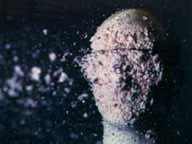
The Famous FBI OC Study of 1989
The FBI Firearms Training Unit completed a three year study in 1989; however, the FBI agent involved in the initial OC evaluation plead guilty of a felony and was convicted of receiving bribes and kickbacks from the major OC vendor several years later.
FBI agent Thomas W.W. Ward, former director of the FBI's Quantico Firearms Training Unit and the agency's chief expert on pepper spray pled guilty (in a Miami Federal court) of a single count felony for accepting a $57,000 in bribes and kickbacks over a two-year period.
Federal prosecutors stated that Ward was receiving $5,000 per month from Luckey Police products, and that based on his research the FBI was purchasing Cap-Stun for use by all of its agents.
The payments were reportedly made by Lucky Police Products, the Fort Lauderdale (Florida) manufacturer of Cap-Stun, then the country's second largest manufacturer of OC or pepper gas. On April 23, 1996 Ward received two months in prison and three years parole.
The Ward case has cast serious doubts on the legitimacy of the FBI's Quantico Firearms Training Unit and specifically the 1989 report on the usage of OC.
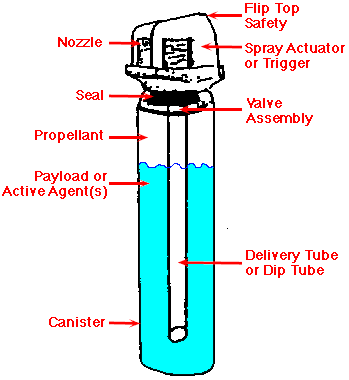
What's Everything Called?
(Nomenclature of a Typical Aerosol Canister)
The nozzle is the "business end" of the canister where the spray is discharged. Nozzles come in several varieties including ones used for ballistic streams, foggers, and foam.
The Flip Top Safety is one of the easiest, and most secure methods of guarding the Spray Actuator or Trigger on the canister. Try to avoid products that require you to turn a lever, or rotate a lock, safety, or latch to operate (you will be unable to find the safety when under attack).
The patented Flip Top Safety found on the Mace Security International Mark VI unit is the preferred type, which MSI sells to other companies.
The Spray Actuator is what the finger depresses to allow the canister to discharge, and must be easy to find under stress. The "button" should be about the same size or slightly larger than your "trigger" or index finger (the size of a quarter is ideal).
The seal is the weak point of any aerosol canister, if the canister is going to leak it will usually be from around the seal. Most canister seals are good for about five (5) years, but the integrity of the seal can radically decrease if the canister is exposed to heat (i.e.: a hot car). Canisters should be inspected on a regular basis (monthly) for leakage and pressure reduction caused by seal deterioration. Nothing is worse then to attempt to spray someone only to have nothing happen due to pressure leakage.
The seal of most canisters are designed to slowly fail if the temperature of the canister exceeds 130 degrees; this prevents the canister from exploding (like a hand grenade) if left inside a hot car.
The valve assembly is activated when the Spray Actuator or Trigger is pushed, allowing the aerosol mixture to escape through the nozzle. The valve assembly sticking fully open on many of the cheaper units causes a common malfunction.
This plastic or metal tube extends down into the can, and allows the agents to travel up to the nozzle. Most canisters will only operate properly when held upright this is due to the delivery tube being too short. Many companies also use a short dip tube in order to decrease the number of “shots” the user gets out of the canister, and thus increase sales. Always buy the product based on the number of one-second bursts, not content volume or weight.
This is the gas that provides the pressure that pushes the payload out of the canister (Dupont 134A, Secondary Butanol, 2-propanol, Compressed Nitrogen, Carbon Dioxide, or a similar inert gas). Until the Montreal Protocol banned it, many companies used the ozone depleting gas Freon as the propellant.
Payload or Active Agents/Ingredients
This is the substance that is delivered out of the nozzle, it is normally composed of an active ingredient such as OC or CS suspended in an organic solvent (including water, 1,1,1 trichloroethane, methylene chloride, isopropyl alcohol, ethyl alcohol, propylene glycol, tetrafluoroethane or Dupont 134A). Until recently many companies used a variety of solvents including highly flammable kerosene or alcohol. The payload commonly includes a citrus scent (D-Limonene) to enable detection of exposed subjects.
Normally this is a lightweight metal tube (usually aluminum) that has been sealed off at one end. It is common for the canister to have a plastic jacket or covering on the smaller civilian and police products.
Most canisters have a domed or concave base, this allows the canister to be pressurized to higher levels without rupturing. This also helps to dissipate the shock of being dropped. Avoid any canister, which does not have a domed base.

Companies that manufacture protective sprays try to maintain a very high level of quality, but they are not always successful. The following is a list of the more common malfunctions, and potential problems to watch out for in the field.
Note: The author has personally seen each of these problems occur both in the field and in training environments.
Fairly common, the trigger is depressed for one second and then released, however the unit continues to spray until it’s empty. This is a common malfunction caused by use of an inferior grade of valve assembly. Some products due to poor design allow pocket change to become trapped between the flip-top safety and the spray actuator or trigger.
The trigger is depressed and nothing happens. This is possibly due to the unit being empty, the propellant has leaked out, the O-ring has failed, or the unit has been left it in a hot car.
A manufacturer will occasionally ship a dud unit; always check new units to ensure that they are pressurized. The nozzle of the unit may become clogged with debris, (pocket lint for example) and should be checked for this on a regular basis.
There are dozens of documented cases where canisters have ruptured or exploded while being used. In most cases, this can be traced to the canister being damaged in a fall, or smashed during a fight (the canister ruptures). Anytime the unit is dropped, goes to the floor, or is involved in a fight it should be discarded.
There have been several cases where the canister has separated from the trigger assembly during usage, due to poor quality controls at the factory (a problem with the larger sized products such as the MK-9).
In this case, the active ingredient is either too strong or too weak. Inert units can be marked as live, and live units can be marked as inert. Again, always check new units to ensure that they are what you ordered. It is very embarrassing when demonstrating inert units to a student to find out that it is actually a live one that was mislabeled by the factory.
Any canister, which has a Flip Top Safety that “sticks”, should be discarded. Such a malfunction is caused when the top is rotated past the stopping point and the “catch” is damaged.

CN is a lacrimator agent, and CS is an irritant, which means they cause mild burning and itching sensations to any exposed surfaces. If CN or CS gets into the eyes they tear, and if it gets into the respiratory tract this causes severe coughing and choking.
For CN and CS to work effectively the person being sprayed must be able to feel pain and discomfort, this is why it frequently does not work on people under the influence of drugs or alcohol.
CN and CS work to produce mild discomfort, and do not totally bewilder the subject like OC.
OC on the other hand is an inflammatory agent and neurotoxin, it causes things to swell up and slam shut. It causes the eyes to burn, the eyelids to slam shut, the throat to close up, and the entire respiratory system to seize up and go into spasms if inhaled by the subject.
OC does not require the person to be able to feel pain the effects are automatic. However, OC tends to work poorly in very cold weather, and on people who eat a lot of peppery type foods (i.e.: Texas or Firehouse Chili).
Chemical weapons also tend to work very poorly on subjects who are in the advanced stages of AIDS/HIV, but even a small amount may actually kill someone with a liver problem.
While CN and CS are both relatively toxic, OC is relatively non-toxic.
According to a study done by the U.S. Army in 1965 at the Edgewood Arsenal CS and CN can have a 50% Median Lethal Dosage (LCt50) in the following concentrations:
CS = 25,000 (mg/cubic meter) (per minute)
CN = 14,000 (mg/cubic meter) (per minute)
This means that CN is roughly twice as toxic as CS
The Edgewood Arsenal study also found the 50% Median Incapacitating Dosage (ICt50) was roughly:
CS = 20 (mg/cubic meter) (per minute)
CN = 80 (mg/cubic meter) (per minute)
This means that CN is roughly one fourth as effective as CS.
We can also calculate a safety factor for both CN and CS, it's the ratio between the Median Lethal Dosage (LCt50) and the Median Incapacitating Dosage (ICt50):
CS = 1250
CN = 175
This indicates that CS is considerably more effective than CN (7.14 times).
According to a similar study completed by the Swedish government in 1992:
“The expressions "threshold concentration" (TC) and "incapacitating or intolerable concentration" (IC) are frequently used to express the efficiency of a tear gas. TC50 thus implies the concentration required to obtain no more than a perceptible effect on 50 per cent of the people exposed to the gas for one minute. ICt50 is the concentration felt to be intolerable by 50 per cent of the people exposed to the gas for one minute.
TC50 and ICt50 values for the most important tear gases are listed in the following table:
Threshold concentrations (TC50) and incapacitating
concentrations (IC50) for tear gases (mg/m3)
CN CS CR
TC50 (eyes) 0.3 0.004 0.004
TC50 (airways) 0.4 0.023 0.002
IC50 20 - 50 3.6 0.7
Acute toxicity of tear gases is very low, i.e., the margin between the concentration giving intolerable effect and that, which may cause injury, is large. It is not until very high concentrations are reached that injury may be serious or lethal. In practice, this requires exposure in closed spaces.
Toxicological investigations have been unable to demonstrate effects of tear gases on genetic material or on fetal development in experimental animals or humans. Neither has any increased risk of cancer been observed.
The dominating use of tear gases in Sweden is within the defense forces. High concentrations of CS (a couple of hundred mg/m3) in the test chamber are used when the correct fitting of protective masks is tested. The exposure which may occur if the mask leaks is, however, extremely brief and without toxicological importance.”
-- Source: A FOA Briefing Book on Chemical Weapons, 1992
OC however has never been found to be directly lethal except in outrageous amounts, and it has much better performance than CS or CN.
Over 115 people have died after being exposed to OC and in each case it was found that either the subject had a pre-existing medical condition (ie: asthma or an allergy to peppers) or that the officers involved were not trained regarding positional asphyxia, and the possible medical implications of using OC.
A U.S. Army study at Aberdeen Proving Grounds in 1993 indicated that OC,
“...is capable of producing mutagenic and carcinogenic effects, sensitization, cardiovascular and pulmonary toxicity, neurotoxicity,
as well as possible human fatalities.”
OC is estimated to be roughly 40 times more effective than CN.
A CS/OC blend is estimated to be roughly 50 to 60 times more effective than a plain CN spray.
Note:
Always keep in mind that if a subject has a violent goal agenda that the use of a chemical weapon will rarely stop a violent attack. It will instead only offer a slight advantage by disabling certain senses such as sight.
One should never rely solely on any single weapon for defense!
Legalities of Protective Sprays
Any time you use Mace (or any kind of defensive weapon) be prepared to defend yourself in civil or criminal court.
Spraying someone with Mace is (by legal definition) an assault, and you must legally be justified to use the spray or to assault someone with a protective spray (or any weapon).
You can easily be fined, sent to jail, or be sued for misusing a defensive spray or any level of physical force.
Keep in mind that the use of any kind of defensive weapon
(including Mace) could result in death or serious injury.
Possessing a defensive spray is another legal issue, in most states it's perfectly legal, in a few states you have to use "special formulations," or you must get a special ID card to purchase it, and in other states it is downright illegal.
The author strongly recommends that you contact an attorney for all legal advice and review the laws for your specific state, county, city, and town.
Mace seems fairly easy to use, simply "point and spray..."
However, there is quite a bit more involved, it's possible to fill hundreds of textbook pages and spend weeks learning how to "point and spray..."
Normal Human Response to Danger
When a person is exposed to severe stress, like being raped, mugged, or assaulted, the body experiences a normal process referred to as Body Alarm Reaction, also called the "Fight, Flight, or Freeze" response.
The only things that can help to overcome this response is proper formal training, practice, and experience. The most common physical "Fight, Flight, or Freeze" reactions are:
Reduced hand-eye coordination (unable to hit the target)
Loss of manual dexterity and fine motor skills
Loss of the fine finger motions (unable to disengage the safety)
Critical Decision Making Impaired
Panicked and Indecisive (entire body tends to freeze)
Complex training starts to breakdown
Commonly referred to a “mental vapor lock”
Unable to recall how many attackers
Can’t recall how many rounds were fired
Did you spray the attacker for one second or one minute
Unable to remember what the attacker looked like
Attention is focused on the source of danger or threat
Vision “cones” down on threat
Swivel or twist your head to compensate
Unable to hear loud noises, shouts, etc...
Gunshots sound like “muffled air”
Unable to hear shouted instructions
Unable to recall what the attacker said
Epinephrine (adrenaline) is flooding into the body when under stress
This flooding causes all major muscle groups to become rigid.
Stress distorts time and the perception of distances
Things may falsely appear to slow down or go into “slow motion”
In addition, things may appear closer or further away than they really are.
The order of events may be out of sequence
Memory may “blank-out” due to sensory overload
Size distortion (pocket knife could look like a three foot machete)
Several years ago, Dr. Eric Nielsen conducted a study under the auspices of the Salt Lake City Police Department and found that police officers involved in shooting incidents commonly experienced the following “time and space” perceptual distortions.
Slow Motion 40 occurrences 63.5% frequency
Tunnel Vision 27 occurrences 42.9% frequency
Auditory Blocking 17 occurrences 27.0% frequency
No Reported Distortion 15 occurrences 23.8% frequency
Keep in mind that some officers reported more than one distortion.
How you will, react depends on several things, the most important of these is proper formal training, and the second is practice or experience.
Buying a can of Mace is good, but unless you have proper training and practice the chances are good that you will die clutching the can, not because it failed... but because you did.
The proper use of Mace (or any defensive weapon)
1. Any weapon must be kept concealed from the attackers view until the exact moment of its usage. Keep it in your pocket, your purse, or palmed, but keep it concealed.
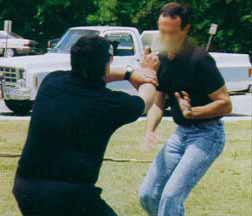
2. The attacker must be surprised by the presentation (snap it up).
3. The presentation must be forceful (punch it out), and use a good defensive stance (strong leg back).
4. Use multiple one-second bursts until the attackers back off (or go down).

5. Aim for the bridge of the nose, eyes, and mouth (use only CS and OC sprays). Spray in a circular pattern across the eyes, nose and mouth (mostly the eyes). The goal is for the chemical weapon to be inhaled by the attacker, and for the chemicals weapon to be sprayed into the attackers eyes.
6. Scream, or yell (“leave me alone -- get away -- help”) at the attacker while spraying.
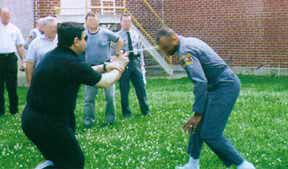
Along with the effects of the spray this will startle and further disorient the attacker and will allow you to “dump some of the rage” that usually builds during such an encounter.
7. Get away from the attack fast, and move when you spray, (it's tough for a blind man to chase you) MOVE -- MOVE -- MOVE.
8. Expect that you will get some Mace on you, and try to get exposed to some of it during a controlled training environment to experience its effects.
9. Once a canister has been used for self-defense, immediately discard it or use it for practice, but do not carry it for defense. Get a fresh unit to carry for defense.
10. Do not carry a can of Mace or any other protective spray or device on your key-ring unless you have a second can (or protective device) on your person. The little key-ring products are great, but not as a primary canister. Car thieves like to snatch the keys from someone just as they unlock their car door... not only could you lose your car, but also your only means of defense, and it can be used against you.
Reporting of Chemical Weapon Usage
In a law enforcement or security environment, officers and protective agents will normally be issued a primary and secondary unit.
The serial number of the issued units should always be recorded in some type of written log. The purpose is to identify the canister if it is later found in the possession of someone other than the officer (such as someone who mugged the officer).
Anytime either unit is used on the street it should immediately be turned in along with a written report concerning the incident. The partially used units should then be saved for use in the next training class. The turned in unit may also be weighed or “floated” to estimate the actual amount applied to the subject(s).
Written reports regarding the use of chemical weapons should be reviewed at least quarterly to identify specific training problems. Statistics regarding their usage should also be compared to those of other agencies to help document the effectiveness.
Proper Grip and Finger Technique
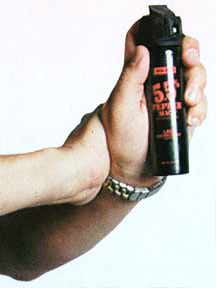
1. Weak hand palm-down position on top of strong wrist
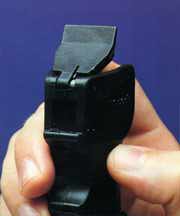
2. Depress button with strong index or trigger finger
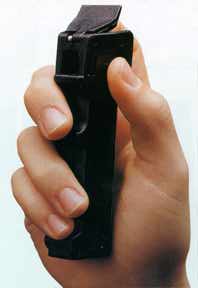
3. Spray with strong hand
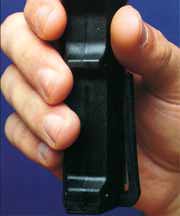
4. Hold on tight, do not allow the canister to be taken from you
5. If the attacker is wearing sunglasses, and/or a brimmed hat you may need to knock the hat/glasses off and spray the subject a second or third time.
When you buy a protective spray (always buy more than one) also buy four or five practice or inert units. They contain a harmless mixture that is little more than water and light citrus scent.
Have a partner put on a pair of swimmers goggles or divers mask, then simulate attacking you and spray them with the inert unit at a distance of six to twelve feet. You should be able to get 30-50 bursts out of each canister, discharge at least two cans (100 shots) each time you practice, and practice at least monthly. It requires at least 2,500 to 5,000 repetitions (over several months) to maintain a skill, and to counteract the Body Alarm Reaction or "Fight, Flight, or Freeze" response. This practice strategy should be repeated as often as possible, but at least every 90 days.
Always practice drawing your canister and firing it at a moving subject, as well as subjects very close to you, and grappling or wrestling with you. The ideal distance to practice is within a “double arms length” or about 12 feet.
Once you become proficient hitting your attacker at close distances (such as twelve foot) slowly begin increasing the distances in six foot increments (12-18-24-30 foot). Become familiar with how your chemical weapons work at various distances. Also, practice spraying into and against the wind with various products.
Practice these skills until your maximum time to assess a threat, draw your chemical weapon (from a concealed location), and properly engage your target is less than three seconds. As always: Practice... Practice... Practice...
Chemical Weapons Learning Theory and Protocols
A simple task (like using a protective spray) can be learned if carefully and patiently taught the proper technique by a competent instructor. Most people only need to be shown the technique once, and then they need to slowly repeat it 25-50 times under the instructor's supervision (this is also referred to as static training).
Once the student has mastered the basics, move into slow dynamic activities (25-50 additional repetitions) where the student has to draw and fire the protective spray while under “a slow controlled attack” that takes place at 1/4 speed. The speed is then slowly increased until the student is able to draw from their holster, pocket, or purse and fire it correctly and at full speed, at an attacker.
Fight Through/Immediate Action Drills
In any tactical training activity, various stimuli may be applied to the student to induce fear, pain, panic or stress. The purpose is to teach the student how to function even while wounded or hurt. A popular technique is to stun a student with a stun gun (or stun belt) while he is engaging an opponent with a chemical weapon. Another technique is to spray a student with an OC mist then have them engage a series of targets with baton strikes or firearms.
“Train the way you fight, and fight the way you train.”
Canisters of protective sprays have an expiration date, keep an eye on that date, also check the canister for leakage, or discoloration on a regular basis.
At least once a week test fire your unit to assure that the nozzle is clear, do not carry the unit for more than three months before you retire it.
Don't be one of the victims who has a ten year old can of Mace clutched in their hand when the chalk-fairy comes to draw a line around you after a mugging.
How to Carry a Chemical Weapon
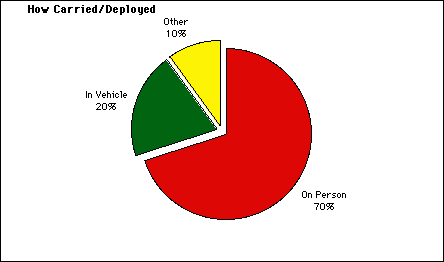
Pants Pocket
This is the preferred method for civilian carry. The canister is carried in the strong side front pants pocket. It is important that nothing other than the canister is carried in the same pants pocket (such as change). The canister is normally located within the pocket in an inverted position on the strong side.
Sam Browne/Duty Belt
Law enforcement and security personnel tend to carry equipment on a wide leather belt referred to as a “Sam Browne” or Duty belt. The ideal location is just behind the firearm on the strong side. The canister may be carried up or down depending on the manufacturer recommendations.
Small of Back/Bodyguard Carry
Often a bodyguard will carry a large fogger (such as a MK-9 or MK-21) in an inverted position in the small of the back. This technique is popular for agents when dealing with large unruly crowds such as those found at rock concerts when a protectee may be swarmed or rushed. For such an inverted carry, the safety pin will be partially removed, and the canister will be carried in a special padded elastic holster for rapid deployment. Either a suit coat or other type of jacket will normally conceal the canister.
Inside Wrist/Bodyguard Carry
A second popular bodyguard technique is to carry an inverted canister on the weak side, concealed just inside the jacket sleeve. The canister is normally dropped into the cupped palm and discharged from an inverted position. The canister is then dropped into the agents pocket or pushed back up the sleeve to conceal the usage. The technique may also be used with the arm raised across the agents face, but tends not to be as covert. This is a popular tactic to use when dealing with overly friendly fans, zealots, stalkers, reporters, photographers, paparazzi, and other undesirables.
Inside Coat Pocket/Bodyguard Carry
A third popular bodyguard location for carry is the inside coat pocket and involves a large canister in an upright position. The canister is drawn from the weak side pocket with the strong hand, and is only exposed enough allow the nozzle to clear the jacket. The canister is then discharged into the subjects face as very close range and the canister dropped back into the pocket. The purpose is to conceal the fact that a chemical weapon has been used and requires a great deal of practice to master. Foam based chemical weapons are ideal for this type of application.
Inside Wrist/Runners Carry
Several products have been designed to allow a jogger or runner to carry a chemical weapon. Most of these products involve an wide elastic wrist band, with the canister concealed below. Security savvy individuals will usually carry the canister high on the weak side arm, and conceal it near the armpit.
Neck/Runners Carry
Many will carry a small canister on a chain around their neck containing their keys. This method should be avoided as a common tactic of a rapist or mugger is to pull the shirt up and over the head of the victim to immobilize the arms, hood the face, and blind the victim. If the canister is carried around the neck there is a very strong likelihood that the canister will be used against the victim to strangle them. (This is a major problem for New York City joggers).
Waistband/Runners Carry
If an athlete carries a canister on the waistband, it should be carried inside the pants, concealed on the strong side, and the location should be covered by a second item of clothing (such as a shirt). Athletes should avoid carrying a protective spray in a pocket, or holster, and stay with the small clip-on style of products.
Waist Pouch or Fanny Pack
A popular secondary location for carry is a waist pouch, the canister is normally located within the pouch in an upright position on the strong side. Such a practice should be avoided as it is difficult to extract a weapon from such a pouch while under violent attack.
Purse, Backpack, Briefcase, or Satchel
While many people carry their chemical weapon, impact weapon, or handgun in a purse or satchel such a practice should be avoided as it is virtually impossible to extract a weapon from such a container while under violent attack.
Key-Chain
Avoid carrying a chemical weapon on your key chain, often an attacker will grab your keys, punch you with them, and then steal your car. This will leave you injured, with no car, no keys, and no means of defense.
Always Remember: Unit could be taken away and used on you!
When to Use -- Use of Force Ladder or Continuum
Confrontational Avoidance
Physical Presence
Key Verbal Skills - Non-Directive
Verbal Commands, Verbal Judo
Body Language/Passive Control
Includes directive voice commands
Soft Empty Hand Controls/Pain Compliance Holds
Pressure points, come-alongs, minimal chance of injury.
May include the defensive use of a chemical weapon.
Defensive Tactics
Defensive actions intended to deflect an attack.
May include the defensive use of a chemical weapon.
Hard Empty/Open Hand Controls
Joint Locks, Stun Holds, Shin Kicks, Strong Chance of Injury
May include the defensive use of a chemical weapon.
Defensive Tactics -- Offensive
Choke Holds, Nerve Stuns, Strong Chance of Injury
May include the defensive use of a chemical weapon.
Martial Arts and Strikes
Closed handed striking tactics, boxing, fist fighting
May include the offensive use of a chemical weapon.
Chemical Weapons
Includes the defensive and offensive use of a chemical weapon.
Electrical Weapons
Contact and Non Contact Electrical Weapons
Impact Weapons/Less Than Lethal Munitions
Batons (Straight, Expandable, Side Handled, Riot, etc.)
Includes the use of impact munitions such as bean-bag rounds.
Lethal Force
Non projectile type weapon and martial arts used with the intent to kill, such as Edged Weapons, Head Snaps, Clipboard to the throat, etc.
Lethal Force
Projectile type weapons such as: Firearms -- Handgun/Shotgun
Other Lethal Force Options
Vehicle Rams, Body Slams, etc....
Types of Discharge and Spray Patterns

Ballistic Stream
The Ballistic Stream has a range of up to 12-15 feet, is designed primarily for law enforcement (as an arrest aid), and is not practical as a protective spray. Tends to strongly effect the eyes, while causing minimal effect to the respiratory system.

Full Cone Spray/Mist
The Full Cone Spray/Mist has a range of up to 6-8 feet, and is ideal for personal defense. Spray pattern is similar to that of a plant mister, and the "mist" is easily inhaled by the attacker, which can have rather dramatic results. Tends to strongly effect the respiratory system, with mild effects to the eyes. Excellent choice for a defense sprays, but tricky to use as it is affected by any wind or breeze. DO NOT USE A FULL CONE SPRAY OR MIST INDOORS.
Pepper Foam
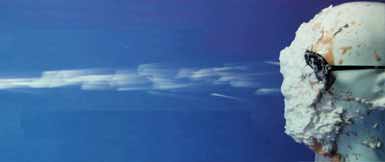
The Pepper Foam has a range of up to 8-10 feet, and is ideal for personal defense. The foam "blindfolds" the attacker and sticks to their face like heavy shaving cream which gives the OC time to take effect. The normal response of the attacker is usually to grab at their face, which of course enhances the performance of the OC. PREFERRED OVERALL CHOICE.

Magnum/Foam
The Magnum can be obtained as either a Magnum Fog, or Magnum Foam. Both have a range of 15-25 feet (or more). Not practical as a protective spray, but very popular with SWAT teams, bodyguards, bounty hunters, concert and sporting event security, bouncers and nightclubs. HIGHLY RECOMMENDED, BUT BULKY.
The products which contain ultraviolet dyes serve no useful purpose, and is a silly (and deceptive) gimmick many of the manufactures add to their product to boost sales. (In reality, police officers do not walk around with ultraviolet lamps in their pocket).
Products containing a visible dye are designed for use by law enforcement and private security. This allows a specific person in a crowd to be targeted and disabled, that person can then be apprehended by the police or security force. Visible dyes are popular for riot control, strike break teams, and concert security. Normally they will be bright orange or bright blue, however a wide variety of colors are available by special request.
Several companies are working on a substance to add into their chemical weapons. This substance is a luminescent fluid which will cause the person sprayed to glow brightly for several hours, this fluid is similar to that found in Cyalume sticks. This glow can be seen with the naked eye, and can be viewed for quite some distance (hundreds of feet). The person sprayed will literally become a walking lighthouse. These companies are also working on infrared versions of the taggents for covert and tactical usage.
Highly Recommended MSI Product Model Numbers
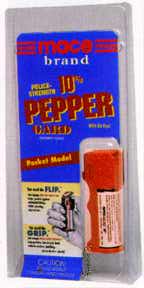 |
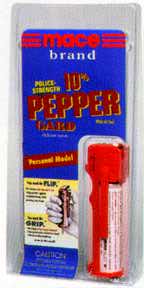 |
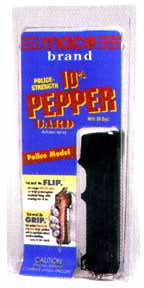 |
Keychain/Backup Unit |
Pocket Unit |
Pocket Unit |
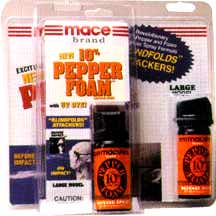 |
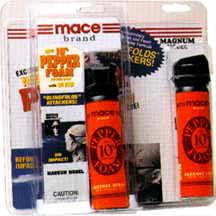 |
Small Pepper Foam |
Large Pepper Foam |
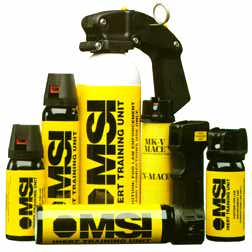 |
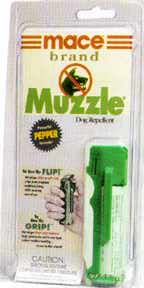 |
(Buy several of the size you use) | Dog Spray |
80171 Keychain/Backup Unit
80153 Pocket Canister
80170 Pocket Canister
80245 Small Pepper Foam
80198 Small Pepper Foam
80246 Large Pepper Foam
80197 Large Pepper Foam
Inert Training Units (Buy several of whatever size you use)
Not Recommended, But Popular MSI Products
80112 Keychain/Pocket Canister
80136 Keychain/Pocket Canister
80141 Keychain/Pocket Canister
80185 Keychain/Pouch
80184 Keychain/Pouch
80146 Muzzle Dog Spray
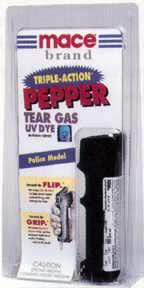 |
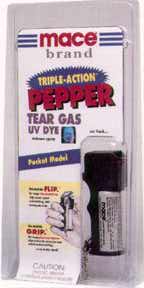 |
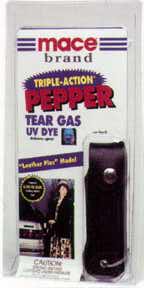 |
Keychain/Pocket |
Keychain/Pocket |
Keychain/Pocket |
|
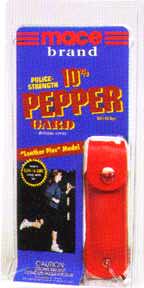 |
Keychain/Pouch |
Keychain/Pouch |
Basic MSI Canister Designs and Sizes
MK-7/MX-VII Keychain/Backup
MK-10/MX-X Keychain/Pocket
MK-6/MK-VI Police/Pocket Model
MK-3/MX-III Small Can "Sam Browne/Duty Belt Can"
MK-13/MX-XIII Medium Can “Pants Pocket Can"
(Highly Recommended)
MK-4/MK-IV Large Can "Torpedo Can"
(Ideal for inside suit pockets)
MK-7/MX-IX Magnum Can "Mutant Fire Extinguisher"
Specialized MSI Models
MK-5/MX-V Refillable Taser Style
MK-8/MX-VIII Refillable Baton
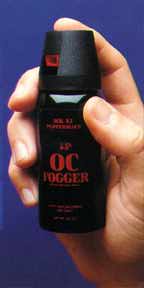
MK-11/MX-XI High Volume Fogger (Small)
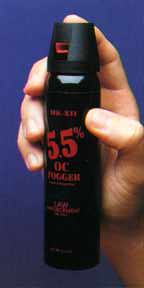
MK-12/MX-XII High Volume Fogger (Large)
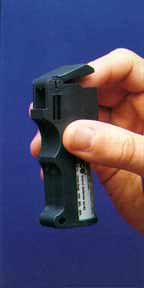 |
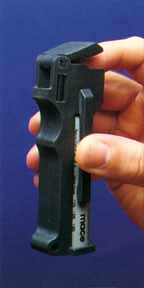 |
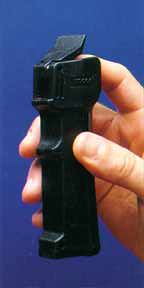 |
Keychain/Backup |
Keychain/Pocket |
Police Model |
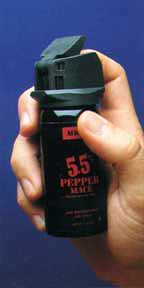 |
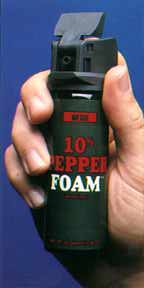 |
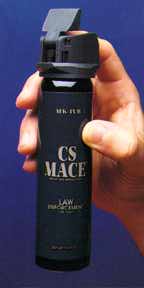 |
Small Can "Sam Browne Can" |
Medium Can "Pocket Can" Recommend for Pocket Carry | Large Can "Torpedo Can" |
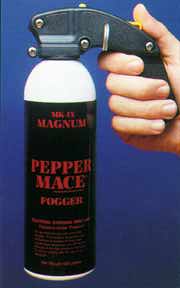
| ||
Magnum Can "Mutant Fire Extinguisher" | ||
Special Models
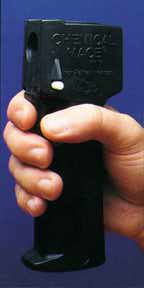 |
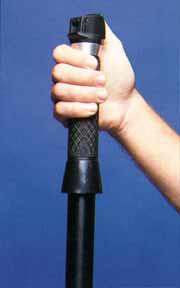 |
Refillable Taser Style |
Refillable Baton |
 |
 |
High Volume Fogger Small |
High Volume Fogger Large |
Highly Recommended Defense Technology/First Defense Products
MK-8 -- Keychain/Backup Unit
MK-6 -- Pocket or Belt Clip Version
MK-3 -- Duty Belt or Pocket (Small)
MK-4 -- Duty Belt or Jacket (Large)
MK-9 -- Large ("Mutant Fire Extinguisher")
MK-21 -- Large ("Fire Extinguisher")
MK-46 -- Large ("Large Fire Extinguisher")
Inert Training Units (Buy several of whatever size you use)
Aerko International products are not recommended for personal defense due to the products design. The product is difficult to draw, and due to the trigger design very difficult to properly engage a target when under attack or in a tactical situation. The OC products also contain a SHU level of 2 million, which is extremely high, very dangerous, and should not be used.
The Aerko International products are only appropriate as a low cost law enforcement and corrections product.
Many of the Aerko Products still use highly flammable alcohol as a transport.
Not Recommended, But Popular Aerko International Products
Cone Shaped/Mist Sprays
M-1 Punch II - OC - 1/2 oz Pocket/Key Chain Size
M-2 Punch II - OC - 3/4 oz Pocket Size
M-3-X Punch II - OC - 3 oz Pocket Size
M-4 Punch II - OC - 4 oz Police/Duty Belt Size
M-5 Punch II - OC - 5 oz Magnum/Grenade
Ballistic Stream Sprays
M-1 Freeze +P - OC/CS - 1/2 oz Pocket/Key Chain Size
M-2 Freeze +P - OC/CS - 3/4 oz Pocket Size
M-3-X Freeze +P - OC/CS - 3 oz Pocket Size
M-4 Freeze +P - OC/CS - 4 oz Police/Duty Belt Size
M-5 Freeze +P - OC/CS - 5 oz Magnum/Grenade
Where to Buy Mace and Other Protective Sprays
Mass Merchandisers/Department Stores
Major store chains (Walmart, K-Mart, Sam’s, Bradlees...) commonly carry a small selection of chemical weapons. The selection is usually minimal, often out of date, and often involves silly gimmick versions of the product.
Gun Stores
If it has anything to do with personal protection, your local gun store will probably have it for sale. The prices tend to be high, and they rarely sell high quality products. They usually offer only one or two types of canisters, and rarely have any type of formal training on the product.
Locksmiths
Many locksmiths now carry a limited selection of chemical weapons. The product selection tends to be very limited, and the sales people are generally not trained in their usage. Beware; the prices tend to be very high.
Hardware Stores
A few hardware stores carry small chemical weapons. They are normally located in the same general area as the keys and locks (usually a key chain version).
Sporting Goods Stores
These stores tend to have a decent selection, prices are usually reasonable, and they tend to have both inert and live units.
Police Supply Stores
This type of dealer will usually have a decent selection, but usually only from one specific company. They generally have minimal training with the product. The prices tend to be fair, but they generally refuse to sell product to the public. Police supply houses also have a long history of selling unused, out-of date products to the public that were discarded from the local police department. (Be sure to check the dates on your product).
Mail Order
Mail Order companies tend to offer a very wide selection, fair prices, and minimal hassles. Product is usually in-date, often only a few days old.
The best mail order dealer for this kind of product is “Police and Correctional Products Division” in Bennington, Vermont. Their prices are reasonable, and they always maintain a good inventory.
Police and Correctional Products Division
439 Main Street - Suite #3
Bennington, VT 05201-2158
(800) 785-0100 Toll Free Order Line - Ask for Maureen
(802) 442-3822 if calling from outside the U.S.
Legal Responsibility to Decontaminate
Police officers who expose a subject to any chemical agent have a moral and legal obligation to field decontaminate the subject as quickly and as effectively as possible.
Failure to render immediate first aid and decontamination
will strongly increase the possibility of a civil rights lawsuit.
Full decontamination may take place once the subject arrives at the station (or hospital), but the officer must field decontaminate and relieve the pain as quickly as possible, BEFORE the subject is transported (unless the subject is being transported for a medical emergency).
The courts have ruled that it is a violation of the Civil Rights Act if the officer does not render immediate field decontamination, or if the subject is refused medical assistance when requested. (Title 42, Chapter 21 § 1983 - Civil Action for Deprivation of Rights).
Imagine for a moment that your spouse (or a small child) was playing with a chemical weapon and accidentally sprayed him or herself. Imagine they inhaled a direct facial burst at close range and got it in their eyes, mouth, and lungs... What would you do? Would you render first aid? Try to decontaminate them? or just let them suffer in pain? Perhaps you would just send them to their room?
You must treat any subject who you have exposed to a chemical
weapon with as much care as you would a helpless child, period!
Signs of Early and Advanced Toxicity indicating a Medical Emergency
(Primarily for the law enforcement, public safety, and EMS community)
Most law enforcement and security personnel have little or no training on the potential lethal complications caused by the application of a chemical weapon.
The very young (0-14), the very old (60+), pregnant women, and those with respiratory conditions are at extreme risk.
Minimal Post Exposure First Aid
CN and CS -- Fresh Air
OC -- Water and Fresh Air
Oxygen if subject has difficulty breathing
Blepharitis may occur up to two to three weeks after exposure
Medical complications may be delayed up to five to seven days
The National Institute of Health, OSHA, Environmental Protection Agency, Department of Defense, Federal Emergency Administration, and other health related organizations all recommend that someone exposed to ANY level of CN, CS, or OC immediately be given medical attention.
Positional Asphyxia Indicators (SICDS Indicators)
If the subject exhibits any of the following indicators, they should be rushed to the emergency room. There is a very high probability that the subject will die if not treated immediately.
Alcohol intoxication
Cocaine intoxication
Obesity -- especially “big bellies”
Bizarre or aggressive behavior
Apparent ineffectiveness of chemical sprays
Paranoia
Extraordinary physical strength
Sudden lethargy or tranquility
Poor overall color
“Blueness” of the lips or nail-beds
Hyperthermia or high body temperature
The National Institute for Occupational Safety and Health has issued the following protocols for dealing with any CN incident or exposure:
NIH Protocols - CN
“SKIN CONTACT:
IMMEDIATELY flood affected skin with water while removing and isolating all contaminated clothing. Gently wash all affected skin areas thoroughly with soap and water.
IMMEDIATELY call a hospital or poison control center even if no symptoms (such as redness or irritation) develop.
IMMEDIATELY transport the victim to a hospital for treatment after washing the affected areas.
INHALATION:
IMMEDIATELY leave the contaminated area; take deep breaths of fresh air.
If symptoms (such as wheezing, coughing, shortness of breath, or burning in the mouth, throat, or chest) develop, call a physician and be prepared to transport the victim to a hospital.
Provide proper respiratory protection to rescuers entering an unknown atmosphere.
Whenever possible, Self-Contained Breathing Apparatus (SCBA) should be used; if not available, use a level of protection greater than or equal to that advised under Respirator Recommendation.
Respirator Recommendation
When working with this chemical, wear a NIOSH-approved full face chemical cartridge respirator equipped with the appropriate organic vapor and high efficiency particulate filter cartridges. If that is not available, a half face respirator similarly equipped plus airtight goggles can be substituted. However, please note that half face respirators provide a substantially lower level of protection than do full face respirators.
EYE CONTACT:
First check the victim for contact lenses and remove if present.
Flush victim's eyes with water or normal saline solution for 20 to 30 minutes while simultaneously calling a hospital or poison control center.
Do not put any ointments, oils, or medication in the victim's eyes without specific instructions from a physician.
IMMEDIATELY transport the victim after flushing eyes to a hospital even if no symptoms (such as redness or irritation) develop.
INGESTION:
DO NOT INDUCE VOMITING. Corrosive chemicals will destroy the membranes of the mouth, throat, and esophagus and, in addition, have a high risk of being aspirated into the victim's lungs during vomiting which increases the medical problems.
If the victim is conscious and not convulsing, give 1 or 2 glasses of water to dilute the chemical and IMMEDIATELY call a hospital or poison control center. IMMEDIATELY transport the victim to a hospital.
If the victim is convulsing or unconscious, do not give anything by mouth, ensure that the victim's airway is open and lay the victim on his/her side with the head lower than the body. DO NOT INDUCE VOMITING.
Transport the victim IMMEDIATELY to a hospital.
SYMPTOMS:
Exposure to this compound causes irritation of the skin and mucous membranes.
It may cause tingling in the nose, with rhinorrhea; and may result in development of a skin rash.
It may also cause laryngitis, headache and vomiting.
Other symptoms include: coughing, wheezing and nausea.
There may also be a burning sensation and shortness of breath.
Possible systemic manifestations include agitation, coma, contraction of pupils and loss of reflexes.
More severe exposure produces pulmonary edema.
Higher concentrations may also cause pigmentation and second degree burns.
There may also be denaturing reactions on the eyes, such as corneal burns.”
-- National Institute of Health Memo Regarding Exposure to CN Tear Gas, August 29, 1991
CN -- omega-Chloracetophenone C6H5COCh2C1
Early Toxicity
Rales -- Breathing sounds like cellophane being crackled
Rhonchus -- Rasping wheeze (sounds almost like light snoring)
Dyspnea -- Extended shortness in breathing
Chest pain/angina
Belly breathing with neck jutting
Nasal breathing with neck jutting
Any sounds of fluid build up or gurgling
Any sounds of wheezing or rasping in breathing
Advanced Toxicity
Frothing at the nose and mouth (possibly tinged with red or pink)
Erythema or edema around the eyes, arms, or genitalia
Hyperactivity followed by hypoactivity (hypoxia/adrenaline crash)
Pulmonary Edema
Asphyxiation is typical cause of death
Any subject who complains of itching, hives, difficulty in swallowing, facial swelling, or who make ANY references to, or comments about allergies to any tear gas products should be IMMEDIATELY evaluated by medical personnel.
CS -- Orthochlorbenzalmalononitrle C1C6H4CHC(CN)2
Early Toxicity
Rales -- Breathing sounds like cellophane being crackled
Rhonchus -- Rasping wheeze (sounds almost like light snoring)
Agitation -- Real problem with CS
Hyperactivity -- Real problem with CS
Subject frequently becomes more violent -- Real problem with CS
Advanced Toxicity
Pulmonary Edema
Pulmonary (Alveolar) Hemorrhage
Hyperactivity followed by collapse
Cyanosis -- Subject starts to turn blue
Vomiting (1-3% of subjects will vomit)
Decreasing levels of consciousness
Dizziness -- Indicates serious overexposure
Headache -- Indicates serious overexposure
Laryngospasm -- Epiglottis locks down
Asphyxiation is typical cause of death
CS effects may be delayed up to 5-7 days
Any subject who complains of itching, hives, difficulty in swallowing, facial swelling, or who make ANY references to, or comments about allergies to any tear gas products should be IMMEDIATELY evaluated by medical personnel.
OC -- Oleoresin of Capsicum C18H27NO3
Due to the pain, and the respiratory shutdown experienced during an OC exposure the subject's health may be at immediate risk.
Use extreme care when dealing with anyone who has been exposed to any OC spray, as heart attack, asthma, sudden in-custody death syndrome, and positional asphyxia are potentially deadly problems.
Any subject who complains of itching, hives, difficulty in swallowing, facial swelling, or who make ANY references to, or comments about allergies to any pepper products should be IMMEDIATELY evaluated by medical personnel.
Early Toxicity
Rales -- Breathing sounds like cellophane being crackled
Rhonchus -- Rasping wheeze (sounds almost like light snoring)
Agitation -- Real problem with OC
Hyperactivity -- Real problem with OC
Advanced Toxicity
Pulmonary Edema
Tracheal Burns
Pulmonary (Alveolar) Hemorrhage
Hyperactivity followed by collapse
Cyanosis -- Subject starts to turn blue
Dizziness -- Indicates serious overexposure
Headache -- Indicates serious overexposure
Laryngospasm -- Epiglottis locks down
Decreasing levels of consciousness
Remember:
EMS and Medical Treatment Modalities for CN/CS/OC
A-B-C Airway -- Breathing -- Circulation
Remove all contamination/field decontaminate
Baseline vitals
Levels of awareness (who are you, where are you, what day is it)
Remove and replace all clothing if possible
Wash subject with sodium carbonate (5% solution) - Ideal
Wash subject with sodium bicarbonate (1-2% solution) - optional
Administer O2 -- “The Drug of Choice”
2-4 liters on nasal cannula (30-40%) or 100% on mask
Breath on bag if needed
Oxygen -- Oxygen -- Oxygen
Drugs for possible administration
Epinephrine 1:10,000 -- Anaphylactic Shock Therapy
Epinephrine 1:1000 -- Allergic Reaction Therapy/combo pen
Diphenhydramine IV
Atropine
Benadryl/Antihistamine
Anectine (Pavulon) -- Synthetic Cuari (blepharo/laryng-spasm)
Dopamine/L-Dopamine
Lidocaine (for “killer heartbeat”)
Positive Pressure Ventilation -- Forced air with a good airway
Endotracheal Intubation- Blade or tube (for respiratory collapse)
Endotracheal Suction
Salves and ointments are contraindicated until after full decontamination (plus at least one hour).
“Corticosteroid cream or calamine lotion may be applied to treat existing dermatitis or to limit delayed erythema. Oozing may be treated with wet dressings of 1 in 40 aluminum acetate solution for 30 minutes three times daily. A topical steroid should follow the wet dressing immediately. Secondary infection is treated with appropriate antibiotics. Significant pruritus can be treated with calamine lotion or corticosteroid preparations. If blisters develop these should be treated as any other second degree burn.“
-- U.S. Army Handbook on The Medical Aspects of NBC Defensive Operations (FM 8-9)
Medical Decontamination Protocols - CS
Preferred skin decontamination solution for CS is 6.7% sodium bicarbonate, 3.3% sodium carbonate and 0.1% benzalkonium chloride. Solution should be gently “misted” onto patient.
Skin decontaminates containing bleach should not be used; bleach reacts with CS to form a combination which is severely more irritating to the skin than CS or bleach alone.
CS is rapidly hydrolyzed in water solution (half-life at pH 7 is about 15 min. at room temperature) and extremely rapid when alkali (soap) is added (half-life at pH 9 is about 1 min.).
Decontamination of areas after contamination with CS can be done with a 5-10 % soda solution or 2 % alkaline solution. If this type of decontamination cannot be accomplished (e.g., contaminated rooms and furniture), then the only other means is by intensive air exchange - preferably with hot air.
Medical Decontamination Protocols - OC
Preferred skin decontamination/pain relief solution for OC cold dairy milk, whipped cream, or ice cream with as high a fat content as possible. A large towel should be saturated with a quart of whole milk, and then given to the subject to hold against their face. The towel should be blotted against the face and not rubbed. A full gallon of milk, with four changes of towels will offer maximum immediate relief to the subject.
Ice and cool water (or snow) may be used to alleviate the burning sensations after decontamination. Water alone may be used to decontaminate if milk is not available, but the discomfort time will be increased by a factor of at least four.
Johnson and Johnson’s baby shampoo also works well for OC decontamination. A small bottle of baby shampoo, several gallons of water (in one quart bottles), and a roll of paper towels should always be kept available in police and security vehicles for immediate field decontamination of the subject.
Do not allow the subject to rub or touch their eyes.
Medical complications may be delayed up to five to seven days
Medical Decontamination Protocols - Generally
Allergic reactions, pre-existing respiratory, kidney, bone marrow, and liver problems can lead to death (at least 129 deaths over the last 15 years have been caused by allergic reactions to OC used by police officers).
Subject must be closely supervised and watched for at least 2 hours after decontamination. Any subject who loses consciousness or starts to feel sick should receive immediate emergency medical attention.
A large number of subjects (58-65%) of subjects will develop blepharitis (a mild eye infection and blockage of the tear ducts) within 14-28 days of exposure, and is normally treated with prescription antibiotics.
If large particles or droplets of the chemical agent have entered the eye, treatment as for corrosive materials may be required.
After complete decontamination, corticosteroid eye preparations may be used.
Subjects who have been heavily exposed must be observed for possible development of corneal opacity and iritis.
Subjects should avoid donating blood for 14 days after being exposed to CN, 7 days for CS, and 2 days for OC.
Subjects should be warned to abstain from any intimate contact for at least 48 hours after exposure.
Subjects who are in the advanced stages of AIDS/HIV should be very carefully evaluated, as a dangerous level of a chemical weapon is required before any effects are visible on the subject.
Additionally, subjects who have a history of kidney, bone marrow, and liver problems should also be very carefully evaluated, as a dangerous level of a chemical weapon is required before any effects are visible on the subject.
Medical Decontamination Protocols - Female Specific Issues
Any mother who is breast feeding an infant and has been exposed to a chemical weapons should stop the breast feeding for at least seven days. If the exposure was to CN or CS the breast feeding should be suspended for at least 14 days.
The pain, anxiety, and stress created by exposure (mostly OC) may cause women to go into premature labor. Exposure to CN, CR, or CS may also cause spontaneous abortion due to the toxic content.
All cosmetics (including foundation, lipstick, and false eyelashes) must be removed before decontamination is complete. Chemical weapons tend to become trapped under most cosmetics, and may cause severe burns unless removed.
Women tend to exhibit less of a visible reaction to chemical weapons (due to their regular use of cosmetics), and should be closely monitored for possible delayed effects.
Medical Decontamination Protocols
Protective Clothing
It is recommended by the U.S. Army that medical personnel assisting with CN, CS, or OC decontamination wear the following protective clothing:
Respirator facemask with HEPA/Organic vapors filter
Rubber or latex gloves, (hood, and boots are optional)
Secure all clothing at the neck, wrists and ankles (with surgical tape)
Any subject who has been exposed to a aerosol chemical weapon at close range (under six feet) should be carefully evaluated for injuries due to hydraulic needle effect (especially the neck, eyes, and surrounding soft tissue areas). Injuries may only be visible under a Woods or UV light, such an examination should only be completed by a dermatologist (an not a general practitioner).
It is common for subject who has been exposed to OC to experience a post exposure euphoria, which may mask medical complications. Subjects should be closely monitored for at least two hours after exposure.
Medical attention must never be
refused to any subject who requests it!
Decontamination Protocols - Various Issues
1) Decontamination of the subject (highest priority)
Remove all contaminated clothing, and launder or dry clean twice.
(Take great care not to cross-contaminate subject with clothing).
Remove, clean, or discard contact lenses, the contacts should only be removed by medical personnel, not the subject.
Remove and clean personal medical devices.
Large particles of CN or CS should be removed from the eye.
Flush face and eyes with cool water (OC only) for 30 minutes.
Have subject cough and spit to dislodge particles in the upper respiratory system. Also, have subject blow nose to dislodge particles.
Have subject rinse mouth and spit with saline solution, do not allow the subject too drink the saline.
Hair, head and face should be washed twice over sink... not in shower.
Subject should take a shower (not a bath) at least twice; wash the hair, face, and ears first.
Subject must be constantly reassured ** Very Important **
2) Ventilate contaminated building areas for at least 2 hours with high speed fans, or for 24 hours using conventional HVAC.
3) HEPA filtered industrial wet-vacuum should be used to clean all surfaces.
4) Non-ionic detergents (such as Tide) should be used to wet-clean all surfaces, upholstery may have to be discarded and/or professionally cleaned.
5) Also, a 5% solution of washing soda (sodium carbonate) may be used.
6) If CN or CS has been used, the building should be heated to at least 130 degrees Fahrenheit and ventilated with high speed fans for at least 4-6 hours (8-12 hours or overnight is ideal).
7) All contaminated foods should be discarded; CN and CS will penetrate most plastic food wraps.
8) All eating utensils, eating areas, and preparation areas must be cleaned with particular care and attention.
9) Strongly consider having a hazardous clean-up crew decontaminate the building in the case of a non-aerosol chemical munition (such as a micro pulverized or pyrotechnic agent) being used inside a building.
Major Manufactures of Mace and Similar Protective Chemical Weapons
MSI -- Mace Security International/Federal Laboratories
160 Benmont Avenue
Bennington, VT 05201
(800) 255-2634
(802) 447-1503
Fax (802) 442-3823
Defense Technology Corporation
P.O. Box 240
Casper, WY 82602-0240
(800) 733-3832
(307) 235-4900
Fax (307) 473-2605
Aerko International
3410 Northeast Fifth Avenue
Fort Lauderdale, FL 33334
(305) 565-8475
Fax (305) 565-8499
Other Manufactures of Protective Chemical Weapons
Aero Tech Labs
728 Northwest Seventh Terrace
Fort Lauderdale, FL 33311
(305) 463-4584
Advanced Defense Technologies
1610 South Main Street, Suite B
Bountiful, UT 84010
(800) 854-8401
Fax (801) 298-7942
B-Safe Industries
P.O. Box 153-H
Scarsdale, NY 10583-8653
(914) 723-2553
Fax (914) 725-2925
CAP-Stun Weapon Systems
1111 Broad Street, Suite 2B
Camden, SC 29020
(800) 882-7011
(803) 432-1875
Fax (803) 432-2859
Casco International, Inc.
P.O. Box 166
Fitzwilliam, NH 03447
(800) 232-2726
(603) 585-9422
Fax (603) 585-9575
Counter Assault
Box 4721
Missoula, MT 59806
(800) 695-3394
(406) 728-6241
Fax (406) 728-8800
Guardian Protective Devices
P.O. Box 133
West Berlin, NJ 08091
(800) 220-2010
(609) 753-7405
Fax (609) 753-7613
Guardian Security Products
21639 North 14th Avenue
Phoenix, AZ 85027
(800) 527-4434
(602) 582-1070
Fax (602) 582-2133
Knock Out Security Products
7061 Southwest 47th Street
Miami, FL 33155
(800) 394-7233
Fax (305) 662-8511
Omega Securities, Inc.
P.O. Box 1
Marlow, NH 03456-0001
(603) 446-7595
Proaer
2887 Miles Avenue
Throggsneck, NY 10465
(203) 224-3352
Fax (718) 822-9273
Security Equipment Corporation
330 Sun Valley Circle
Fenton, MO 63026
(800) 325-9568
(314) 343-0200
Bibliography -- Additional Research and References
AAI Corporation, Training Course, AAI Corporation, Hunt, Maryland.
ACLU, ACLU Report: A Magic Bullet Under Scrutiny, Southern California ACLU, September 28, 1993.
Aerko International, Material Safety Data Sheets (entire product line), Aerko International, Fort Lauderdale, Florida, Fall 1994.
Aldrich Chemical Company, Aldrich Catalog/Handbook of Fine Chemical, Aldrich Chemical Co., Inc., Milwaukee, WI, 1986.
Amnesty International, Chemical Report on CS Agent #6, Amnesty International, London, England.
Anderson, P.J. et al, Acute Effects of the Potent Lacrimator o-chlorobenzylidene malonitrile (CS) Tear Gas, Human and Experimental Toxicology, 1996.
Archambault Thomas J., Law Enforcement Use of Force Issues and Strategies Seminar for Supervisory Personnel, Personal Protection Consultants, Inc., Brewster, Massachusetts, 1992.
Archambault Thomas J., OC Aerosol Spray Instructor Manuals, Personal Protection Consultants, Inc., MSI, Brewster, Massachusetts 1991-1993.
Archambault Thomas J., Police Non-Lethal Use of Force Instructor Manual, Personal Protection Consultants, Inc., 1989, Brewster, Massachusetts.
Archambault, Thomas J., and Rookwood, Gregory L., Master Chemical Munitions Specialist Instructor Trainer Course Manual, Mace Security International Training Division, Mace Security International, Bennington, Vermont, 1995.
Archambault, Thomas J., and Rookwood, Gregory L., O.C. (Oleoresin Capsicum) Aerosol Spray Instructor Certification Training Manual, Mace Security International Training Division, Bennington, Vermont, 1994.
Archambault, Thomas J., and Rookwood, Gregory L., SICDS Training Manual, Mace Security International Training Division, Bennington, Vermont, 1995.
Archambault, Thomas J., and Rookwood, Gregory L., SICDS Training Videotape, Mace Security International Training Division, Bennington, Vermont, 1995.
Archambault, Thomas J., and Rookwood, Gregory L., The Complete O.C. Aerosol Spray Video, Mace Security International Training Division, Bennington, Vermont, 1994.
Arthur D. Little, Inc., Health and Safety Package for Alpha-Chloracetophenone, Arthur D. Little, Inc., Cambridge, MA, 1978.
Ballantyne, Bryan, Riot Control Agents, Biomedical and Health Aspects of the Use of Chemicals in Civil Disturbance, 1977.
Lazzeri M., and Barbanti G., and Beneforti P., and Turini D., Intraurethrally Infused Capsaicin Induces Penile Erection In Humans, Scandinavian Journal of Urology and Nephrology, 1994.
Bennett, Barbara, Exposed Faced Detoxification, Bennington Banner, Bennington Vermont, October 6, 1995.
Bennett, Barbara, Mystery Gas Forces Evacuation, Bennington Banner, Bennington Vermont, October 6, 1995.
Berger, Joseph, Justice Department Studies Police Use Of Force, Casper Star Tribune, Casper, Wyoming, October 17, 1993.
Beswick, F.W., Chemical Agents Used in Riot-Control and Warfare, Human Toxicology.
Beswick, F.W., Maynard, R., Poisoning in Conflict, an Oxford Textbook.
Bolz, Frank and Dudonis, Kenneth J, and Schulz, David P, The Counter-Terrorism Handbook: Tactics, Procedures, and Techniques, Elsevier (CRC) Press, 1990.
Boublik, T., Fried, V., and Hala, E., The Vapor Pressures of Pure Substances.
Brown, Fredenc J., Chemical Warfare A Study In Restraint, Princeton, New Jersey, Princeton University Press, 1968.
Buckingham, J., Ed, Dictionary of Organic Compounds, 5th Ed. Chapman and Hall, New York, 1982.
Chapman, A.J. and White C., Case Report: Death Resulting from Lacrimatory
Agents, Journal of Forensic Science, 1978.
Cole, Dennis M. and Berry, Craig C., Non-Lethal Chemical Agents Student Handbook, Perfect Solutions, Encinitas, CA, 1990.
Cookson, and Nottingham, A Survey of Chemical and Biological Warfare 1969.
Crockett, Thompson S., Police Chemical Agents Manual. IACP - International Association of Chief of Police, Inc., Professional Standards Division, Washington, DC, 1969.
Dean, John A., Ed, Lange's Handbook of Chemistry, 13th Ed., McGraw-Hill Book Company, New York, 1985.
Def-Tech, Chemical Weapons Instructors Manual, Defense Technology Corporation, Casper, Wyoming, 1993.
Def-Tech, Material Safety Data Sheets (entire product line), Defense Technology Corporation, Casper, Wyoming, 1994.
Department of Justice, Oleoresin Capsicum: Pepper Spray as a Force Alternative, National Institute of Justice, Washington, DC, March 1994.
Department of the Army, Military Chemistry and Chemical Compounds (Army Field Manual FM 3-9), Washington, DC, 1975.
Department of the Army, Ordnance Corps Manual: Ordnance Safety Manual (ORD M 7-224), Washington, DC, 1951.
Department of the Army, Potential Military Chemical/Biological Agents and Compounds (Army Field Manual FM 3-9), Washington, DC, 1990.
Department of the Army, Chemical Munitions (Field Manual 21-40), Washington, DC.
Department of the Army, Chemical Munitions (Field Manual 21-41), Washington, DC.
Department of the Army, Chemical Munitions (Technical Training Tape 931-061-0062-F), Washington, DC.
Department of the Army, Explosive Ordnance Disposal Service, Washington, DC, October 1974.
Department of the Army, Grenades and Pyrotechnic Signals, (Field Manual 23-30). Washington, DC, December 1988.
Department of the Army, The Toxicology of CN, CS and DM, US Army Chemical Research and Development Command, Edgewood Arsenal, Edgewood, MD, 1965.
Department of the Army, Treatment of Chemical Agent Casualties and Conventional Military Chemical Injuries (Army Field Manual 8-285), Washington, DC, February. 1990.
Department of the Army, U.S. Army Handbook on The Medical Aspects of NBC Defensive Operations (FM 8-9). Washington, DC, 1975.
Department of the Army, U.S. Army Handbook on The Medical Aspects of NBC Defensive Operations (FM 8-9), Washington, DC, February 1996.
DeWitt, Dave, and Bosland, Paul, The Pepper Garden, Ten Speed Press, Berkeley, CA, 1993.
Dow Chemical, Inc., Material Data Safety Sheet - CS, 1988.
Dreisbach, R.H., Handbook of Poisoning: Prevention, Diagnosis and Treatment, 11th Ed, Lange Medical Publications, Los Altos, CA, 1983.
DuBay, David K., Toxicity of Tear Gas Containing Oleoresin Capsicum (OC), unpublished research proposal for Defense Technology, 1994.
DuBay, David K., Oleoresin Capsicum and Pepper Sprays, Product Catalog and Specification Manual, Defense Technology.
DuBay, David K., Aerodynamic Particle Size Analysis of First Defense Pepper Spray, Defense Technology.
DuBay, David K., Health Risk Analysis of First Defense Pepper Spray Using an Acute Whole Body Inhalation Exposure, Defense Technology.
DuVernay, Bert, When Compliance Is Needed: What Chemical Agent To Spray and How To Spray It, Police Magazine, February 1993.
FBI Academy, Report of Oleoresin Capsicum: Training and Use, Federal Bureau of Investigation, FBI Academy, Quantico, Virginia, 1989.
Federal Laboratories, Material Safety Data Sheets (entire product line), Federal Laboratories, Saltsburg, Pennsylvania, Fall 1994.
Federal Laboratories, Tactical Chemical Weapons Instructors Manual, Saltsburg, Pennsylvania, 1992.
FOA A FOA Briefing Book on Chemical Weapons, FOA, S-172 90 Stockholm, Sweden, 1992
Fuller, R.W., Bronchoconstrictor Response to Inhaled Capsaicin in Humans, Journal of Applied Physics, 1985.
Geiger , H. Jack, and Cook-Deegan, Robert M., The Role of Physicians in Conflicts and Humanitarian Crises, Case Studies from the Field Missions of Medicine, Eds. Wetherall, D.L., Ledingham, J.G.G., and Warrell, D.A. Physicians for Human Rights (1988 to 1993),
Goodrich, Jon E., (President, Mace Security International, Inc.), Consent agreement between MSI and the Federal Trade Commission regarding false and unsubstantiated representations in advertising, Mace Security International, Bennington, Vermont, April 1994.
Gosselin, R.E., Hodge, H.C., and Smith, R.P., Clinical Toxicology of Commercial Products, 5th Ed, Williams and Wilkins, Co. Baltimore, 1984.
Govindarajan, V.S., and Sathyanarayana, M.N., Capsicum -- Production, Technology, Chemistry and Quality, Part V -- Impact on Physiology, Nutrition and Metabolism; Structure, Pungency, Pain, and Desensitization Sequences, Food Science, November 29, 1991.
Grant, W. Morton, M.D., Toxicology of the Eye, 3rd Ed, Charles C. Thomas, Publisher, Springfield, IL, 1986.
Hoffman, Patrick G., and Lego, Mary C., and Galetto, William G., Separation and Quantitation of Red Pepper Major Heat Principles by Reverse-Phase High-Pressure Liquid Chromatography, J. Agric. Food Chem. 1983, vol. 31 pp 1326-1330.
Home Office, Report of the Inquiry Into the Medical and Toxicological Aspects of CS (Ortho-chlorobenzylidene malononitrile), Part II: Inquiry into Toxicological Aspects of CS and its use for Civil Purposes, 1971. Also referred to as the Himsworth Report.
Hu, Howard, Toxicodynamics of Riot-Control Agents (Lacriminators), Chemical Warfare Agents (Satu M. Somani ed., 1992).
Hunter, John C., Focus on Use of Force-Pepper Spray, May 1994.
IACP, Pepper Spray and In-Custody Deaths, Executive Brief, IACP - International Association of Chiefs of Police, Alexandria, Virginia, March 1994.
Jacobs, Morns B., War Gases. Interscience Publishers, Inc., New York, 1942.
Lenga, Robert E., The Sigma-Aldrich Library of Chemical Safety Data, Edition 1, Sigma-Aldrich Corporation, Milwaukee, WI, 1985.
Lenz, Robert R., Explosives and Bomb Disposal Guide -- 5th printing, Charles C. Thomas Publisher, Springfield, Illinois, 1965.
Levine, Blavley, Non-Lethal Chemical Munitions -- Instructor Manual, Israeli Military Industries, Nazareth, Israel, 1990.
Levine, Blavley, Riot and Crowd Control Munitions -- Instructor Manual, Israeli Military Industries, Nazareth, Israel, 1988.
Levine, Blavley, Stun Grenades and Distraction Devices for Military Special Operations -- Instructor Manual, Israeli Military Industries, Nazareth, Israel, 1991.
Lewis, Richard J., Sr. and Tatken, R.L., Eds, Registry of Toxic Effects of Chemical Substances, Microfiche Ed, National Institute for Occupational Safety and Health, Cincinnati, OH, Quarterly Updates, AM6300000.
Mallinckrodt, Inc., Material Data Safety Sheet - CS, 1989.
Mattoon, Steven, SWAT/SRT Instructional Manual For Tactical Teams, The Final Option, January 1993.
McQuay, D Carroll, and Jadad, A., Wiffen, P., Moore, A., Anticonvulsant Drugs For Management of Pain: A Systematic Review, British Medical Journal, 1995.
Momboisse, Ramond M., Crowd Control and Riot Prevention. Department of Justice, State of California, 1964.
Morton, Tom, Def-Tec Defends Pepper Spray. ACLU: Product Linked To 26 Deaths In California, Casper Star Tribune, Casper, Wyoming, 06/20/95.
Morton, Tom, Pepper Spray Made in Casper Involved in New York Man's Death, Casper Star Tribune, Casper, Wyoming, 10/16/93.
Morton, Tom, Police Cite Added Factors in Pepper Spray Deaths, Casper Star Tribune, Casper, Wyoming, 06/21/95.
MSI, Material Safety Data Sheets (entire product line), Mace Security International, Bennington, Vermont, 1994.
Nielsen, Eric, Perceptual Distortions During Shooting Incidents, (study of 63 shooting incidents), Salt Lake City Police Department.
Nowicki, Edward, and Ouellette, Roland; and Smith, Larry, CAP-Stun Weapon Systems Aerosol Instructor Manual.
Oak Ridge National Laboratory, Environmental Mutagen Information Center (EMIC), Bibliographic Data Base, Oak Ridge National Laboratory, Oak Ridge, TN.
Oak Ridge National Laboratory, Environmental Teratogen Information Center (ETIC), Bibliographic Data Base, Oak Ridge National Laboratory, Oak Ridge, TN.
O’Halloran, R.L., Restraint Asphyxiation in Excited Delirium, The American Journal of Forensic Medicine and Pathology, 1993.
Onnen, J., Oleoresin Capsicum, IACP - International Association of Chief of Police, Inc., Alexandria, Virginia, 1993.
Overman, Thomas C. III, Utilization of the Inflammatory Agent Oleoresin Capsicum, Arlington County, VA Police Department, Arlington, Virginia, 1990.
Park, S. and Giammona, S.T.M., Toxic Effects of Tear Gas on an
Infant Following Prolonged Exposure, American Journal of Diseases, 1972.
Parneix-Spake, A. et al, Severe Cutaneous Reactions to Self-Defense Sprays, Dermatology 129, 1993.
Peters, John, Defensive Tactics With Chemical Sprays Training Video, Albuquerque, New Mexico, Defensive Tactics Institute, Inc.
Praddep Kumar, Pravin, and Kumar, K. Zachariah, and R. Ujayaraghavan, G.P., and Rai Neelima Singh, Effects of w-Chloracetophenone (CN) Vapor Inhalation on Pulmonary Immune Systems of Mice, Bulletin of Environmental Contamination And Toxicology, Springer-Verlag, New York, Vol. 50, 1993.
Prentiss, Augustin M., Chemicals in War, McGraw‑Hill Book Company, New York and London, 1937.
Reay, Donald T., et al., Positional Asphyxia During Law Enforcement Transport, The American Journal of Forensic Medicine and Pathology, 13 (2), 1992.
Rookwood, Gregory L., Medical Considerations for OC Contamination, MSI Training Division, Bennington, Vermont, 1993.
Rookwood, Gregory L., Medical Implications and Treatments Resulting From Exposure to Chemical Munitions, Mace Security International, Bennington, Vermont, 1995.
Sax, N. Irving, and Lewis, R.J., Sr., Eds, Hawley's Condensed Chemical Dictionary, 11th Ed, Van Nostrand Reinhold, New York, 1987.
Sax, N. Irving, Ed, Dangerous Properties of Industrial Materials Report, Bi-monthly Updates, Van Nostrand Reinhold Company, Inc. New York, Jan/Feb 1984, Vol. 4, #1.
Sax, N. Irving, Ed, Hazardous Chemicals Information Annual, No. 1. Van Nostrand Reinhold Information Services, New York, 1986.
Sax, N. Irving, Dangerous Properties of Industrial Materials, 6th Ed. Van Nostrand Reinhold, New York, 1984.
Sittig, M., Handbook of Toxic and Hazardous Chemicals and Carcinogens. 2nd Ed, Noyes, Publications, Park Ridge, New Jersey, 1985.
Smith and Wesson Academy, Body Alarm Reaction and Its Implications for Police, Smith and Wesson Academy, Springfield, Massachusetts.
Smith and Wesson Academy, Chemical Munitions Instructor Training Manual, Smith and Wesson Academy, Springfield, Massachusetts.
Smith and Wesson Academy, Chemical Weapons for the Protective Specialist Course, Smith and Wesson Academy, Springfield, Massachusetts.
Smith and Wesson Academy, Subconscious Reflex, Smith and Wesson Academy, Springfield, Massachusetts.
Smith, Larry, American Society of Law Enforcement Trainers, 5th International Seminar, Milwaukee, Wisconsin, Larry Smith Enterprises, 1991.
Stull, D.R., Vapor Pressure of Pure Substances: Organic Compounds, Industrial and Engineering Chem. 39(4):517-550, 1947.
U.S. Department of Health and Human Services and U.S. Department of Labor, NIOSH/OSHA Occupational Health Guidelines for Chemical Hazards, 3 Vols, DHHS (NIOSH) Publication No. 81-123, January, 1981.
U.S. Director of Central Intelligence, Human Resource Exploitation Training Manual, Central Intelligence Agency, Washington, DC, 1983.
U.S. Director of Central Intelligence, KUBARK Counterintelligence Interrogation Manual, Central Intelligence Agency, Washington, DC, July 1963.
U.S. District Court in Albany New York, Mace Security International v. Defense Technology, December 8, 1994.
U.S. District Court in Miami Florida, United States v. Thomas W.W. Ward, 1996.
U.S. District Court in Tacoma Washington, James Horton et al. v. Bob Williams (Green Hill School), Judge Robert J. Ryan, 1994.
U.S. Environmental Protection Agency, Office of Toxic Substances, Toxic Substances Control Act Chemical Substance Inventory: 1985 Edition, 5 Vols, U.S. Environmental Protection Agency, Washington, DC, January 1986.
U.S. General Accounting Office, Israel: Use of U.S. Manufactured Tear Gas in the Occupied Territories, Washington, DC, 1989.
U.S. General Accounting Office, Report of a Medical Fact Finding Mission by Physicians for Human Rights, Washington, DC, 1988.
U.S. General Accounting Office, The Casualties of Conflict: Medical Care and Human Rights in the West Bank and Gaza Strip, Washington, DC.
U.S. House of Representatives, Investigation Into the Activities of Federal Law Enforcement Agencies Toward the Branch Davidians, U.S. House of Representatives, Washington, DC, August 2, 1996.
U.S. Supreme Court, Graham v. Connor, 490 U.S. 386, 396-397 (1989)
United Kingdom, Medical Manual of Defense Against Chemical Agents (JSP 312). Publisher: Her Majesty's Stationery Office, 1987.
Verschueren, K., Handbook of Environmental Data on Organic Chemicals, 2nd Ed, Van Nostrand Reinhold, New York, 1983.
War Department, Defense Against Chemical Attack, (Field Manual 21-40), U.S. War Department, September 1946.
Watkins, T.F., Cackett, J.C., and Hall, R.G., Chemical Warfare, Pyrotechnics and The Fireworks Industry. Pergamon Press, London and New York, 1968.
Weast, R.C., and Astle, M.J., Eds, CRC Handbook of Data on Organic Compounds, CRC Press, Inc., Boca Raton, FL. 1985, Vol. 1, p. 31, #A00508.
Weast, R.C., Astle, M.J., and Beyer, W.H., Eds, CRC Handbook of Chemistry and Physics, 67th Ed, CRC Press, Inc, Boca Raton, FL, 1986.
Weigand, D.A., Cutaneous Reaction to the Riot Control Agent CS, Military Medicine, pp 437-440.
Windholz, M., Ed, The Merck Index, 10th Ed, Merck and Co. Rahway, NJ, 1983.
Wy Zhang, and A Li Wan Po. The Effectiveness of Topically Applied Capsaicin, European Journal of Clinical Pharmacology 1994.
Zamora, Jim Herron, Pepper Spray Study is Tainted: Industry Paid Off FBI Agent Who Did the Research, San Francisco Examiner, May 20, 1996.
Aerosol Chemical Weapons Training Kit (one per student)
(Student Supplies and Munitions Kit)
Administrative Materials and Texts (qty per student)
(1ea) Student Registration
(1ea) Student Medical Questionnaire
(1ea) Student Release Form
(1ea) Student Exposure Form
(1ea) M.S.D.S - Material Safety Data Sheets
(1ea) Student Textbook
(1ea) Student Practical Exercise Score Sheet
(1ea) Student Written Examination
(1ea) Certificate of Completion (for those who pass course)
(1ea) Certificate of Attendance (for those who fail course)
Training Munitions - Expend during course (qty per 10 students)
(1ea) MK-6 Inert Trainer - Police/Pocket Clip
(1ea) MK-3 Inert Trainer - Duty Belt Can
(2ea) MK-4 Inert Trainer - Large Can (Ballistic Stream)
(2ea) MK-4 Inert Trainer - Large Can (Fog/Cone)
(2ea) MK-4 Inert Trainer - Large Can (Foam)
(1ea) MK-9 Inert Trainer - Magnum Fogger or Foam
Training Equipment (qty per student)
(1ea) MK-4 Training Holster (Nylon or Leather)
(1ea) Wrap-Around Safety Goggles (for practice)
(20ea) Targets, Chemical Weapon - Aerosol (for practice)
Exposure Munitions (qty per student)
(1ea) MK-3 Live Unit - OC Fog/Cone - Duty Belt Can
Exposure Decontamination Kit (qty per student)
(1ea) Spray Bottle or Spritzer
(1ea) One Gallon Plastic Bucket
(1ea) Roll of Paper Towels
(1ea) Large Bath or Beach Towel
(1ea) Large Wash Cloth (Face Size)
(1ea) One Liter Bottled Potable Water (to rinse mouth)
(1ea) One Gallon (or more) of water and/or Garden Hose
Exposure Decontamination Materials (Optional)
(1ea) Commercial Spray (ie: Relief, etc...)
(1ea) One Quart of Dairy Cream or Ice Cream
(1ea) 2 cups of Snow or Crushed Ice
Kits Available From:
Police and Correctional Products Division
439 Main Street - Suite #3
Bennington, VT 05201-2158
(800) 785-0100 Toll Free Order Line
(802) 442-3822 if calling from outside the U.S.
Ask for Maureen, and mention this textbook
(Twelve Hour - One Day Basic Training with exposure)
Classroom Segment
Instructor Introduction (5 minutes)
Administrative Tasks and Forms (15 minutes)
Definitions, What is Mace, Who Makes Mace (10 minutes)
History of Chemical Weapons (20 minutes)
Training Credentials and Certification Process (15 minutes)
First AM Break (5 minutes)
About Tear Gases and Chemical Agents (45 minutes)
Nomenclature of Aerosol Canisters (30 minutes)
Second AM Break (15 minutes)
Common Product Malfunctions (10 minutes)
How Does it Work (10 minutes)
Legalities (10 minutes)
Proper Usage (5 minutes)
Learning Theory and Drills (5 minutes)
Preventive Maintenance (5 minutes)
Methods of Transport (10 minutes)
Use of Force Ladder or Continuum (10 minutes)
Types of Discharge Pattern (5 minutes)
Recommended Products (5 minutes)
Third AM Break (5 minutes)
Methods of Decontamination (20 minutes)
Medical and EMS Modalities (20 minutes)
Lunch Break (60 minutes)
Tactical or Range Segment
Tactical Introduction - Model Performance (5 minutes)
Demonstrate Product Malfunctions (10 minutes)
Demonstrate Types of Discharge Patterns (5 minutes)
Demonstrate Wind Shift (5 minutes)
Demonstrate Mild Effects (OC Walk through) (15 minutes)
Proper Usage - Demonstrate Model Performance (5 minutes)
Static Practice Segment
Proper Usage - Practice (100 reps minimum) (40 minutes)
Preventive Maintenance (5 minutes)
Methods of Transport (5 minutes)
First PM Break (5 minutes)
Dynamic Usage Segment
Demonstrate Use of Force Ladder or Continuum (5 minutes)
Practice Use of Force Ladder or Continuum (15 minutes)
Decontamination Segment
Methods of Decontamination (30 minutes)
Medical and EMS Modalities (20 minutes)
Second PM Break (15 minutes)
Note:
Decontamination segment should be expanded to at least four hours when taught to medical, EMS, or protective students. This may cause course to run into a second day. Practice segment may also be increased as required.
Exposure Segment
Prep/Change Clothes (10 minutes)
Practical Examination (15 minutes)
OC Exposure (15 minutes)
OC Decontamination (30 minutes)
Cleanup/Change Clothes (10 minutes)
Third PM Break (15 minutes)
Examination and Certification Segment
Discussion and Review (45 minutes)
Question and Answer Session (20 minutes)
Fourth PM Break (5 minutes)
Written Examination - 100 Questions (30 minutes)
Final PM Break (15 minutes)
Presentation of Certificates and Graduation (15 minutes)
Notes:
1. Students who fail any segment of training, or who does not receive live exposure will receive a Certificate of Attendance instead of a Certificate of Completion.
2. Students should be observed for potential complications caused by the OC exposure for at least 2 hours after the exposure.
3. Students should be warned regarding washing the contaminated clothing with other clothing ("Hot Pants" Warning)
4. Students should be warned regarding washing the face and hair first. ("Hot Hair/Hot Privates" Warning)
5. Students should be cautioned about the post exposure euphoria that occurs in about half of the subject's. ("OC buzz" Warning).
6. Students should be alerted to secure medical treatment for any condition which OC exposure may aggravate.
7. Students who wear contact lenses, have sensitive eyes, or who tend to react to allergies should be alerted that there may be a mild drying effect, or mild infection caused by the CW exposure.
Published by: Granite Island Group
127 Eastern Avenue, #291
Gloucester, MA 01931-8008
(978) 381-9111
Copies of this textbook are available for $24.95 per copy, plus $5.00 for shipping and handling within the United States. If you use or copy this manual in any way please be honorable and forward payment to the publisher at the above address.
©1997, James M. Atkinson. All rights reserved, Copyright under Berne Copyright Convention, Universal Copyright Convention, and Pan-American Copyright Convention. No part of this book may be reproduced, stored in a retrieval system, or transmitted in any form, or by any means, electronic, mechanical, photocopying, recording or otherwise, without prior written permission of the publisher and author.



|
To be contacted for a confidential consultation please E-mail: jmatk@tscm.com
or send a letter via US Mail to:
or call:
URL: http://www.tscm.com/ |